

Extend effective GPU memory and run more-capable AI workloads on existing local systems by rethinking how memory is managed across the stack.
As AI adoption accelerates, so does pressure on the infrastructure that supports it. Over the past year, memory pricing has surged alongside demand for AI-capable systems. GPUs with high-bandwidth memory are harder to source. DRAM shortages continue to ripple through supply chains. Systems configured for AI workloads are commanding premium prices.
For many organizations, the instinctive response has been to look at raw compute. More GPUs. Larger clusters. Higher-performance parts. Yet as teams deploy real models into production, a different constraint often surfaces first.
AI workloads are increasingly memory bound.
If you are planning AI initiatives for workstations, AI PCs, edge servers, or departmental systems, understanding that shift is critical. While compute still matters, memory capacity and memory efficiency are quickly becoming the primary scaling limit.
AI workloads are memory bound
Recent trends and developments in AI are driving the need for more memory capacity and greater efficiency during runtime. These include the ever-increasing size of modern AI models, the expansion of context windows, architectures such as mixture of experts (MoE) that keep more parameters accessible, and agentic and multistep inference workflows that keep state in memory longer.
In the past, many AI teams looked at memory bottlenecks as a GPU issue. On paper, GPUs offer immense compute throughput. In practice, however, GPU memory is often exhausted before the compute cores are fully utilized. On workstations, PCs, and small servers, this constraint shows up quickly. You may have sufficient compute headroom, but your model doesn’t fit in memory. Or it fits only by aggressively trimming context length or reducing model capability.
The problem of memory bottlenecks is not theoretical. It is operational.
As AI expands from centralized hyperscale environments into enterprise departments and edge deployments, these constraints become more apparent. A local engineering team experimenting with a reasoning model may find that GPU memory fills long before performance goals are reached. A data science group running long context inference may see KV cache growth dominate available memory.
When memory fills up, performance degrades or workloads fail outright. At that point, teams begin looking for ways to expand capacity.
That leads directly to the next challenge.

GPU memory is fixed and expensive
Unlike system memory in a traditional server, GPU memory is integrated into the GPU itself. You cannot upgrade it independently.
If your model requires more memory than your current GPU provides, the typical answer is to purchase a higher-memory GPU. Even if the compute capacity of your existing GPU is sufficient, you are forced to move to a larger and more expensive GPU simply to gain memory headroom.
In the current market, that decision carries significant cost implications. Ongoing DRAM supply pressures have increased the price of GPUs and AI-configured systems. High-memory GPU models are particularly expensive and often more difficult to source. When you step up to a larger GPU, you are paying for both additional memory and additional compute whether you need it or not.
This dynamic amplifies the pricing surge. As more organizations compete for memory-rich GPUs, supply tightens further. Prices climb. Procurement timelines extend. AI budgets expand faster than anticipated.
For enterprise teams that are building local AI capabilities, the economics become difficult to ignore. You may have already invested in capable GPUs. Yet to run a slightly larger model or enable longer context, you are pushed toward a full hardware refresh.
At this point, many organizations consider adding more GPUs instead of replacing them.
That approach seems logical. It also introduces its own limitations.
Why adding GPUs doesn’t always solve the problem
Adding GPUs can improve throughput in many scenarios. For multiuser applications, distributing sessions across several GPUs is straightforward. It can increase overall system capacity and reduce wait times for concurrent workloads.
However, many inference workloads operate on a single GPU per session. A single user running a large model may be limited by the memory available on the device. Adding additional GPUs increases the number of sessions you can handle simultaneously. It does not increase the usable memory available to a single model instance.
To combine GPUs into a single larger memory pool requires sophisticated parallelism strategies. You must shard the model, coordinate communication across devices, and manage synchronization overhead. These approaches can introduce additional latency and require specialized software stacks. They also increase operational complexity.
There are certain use cases where you might see little benefit from simply adding more GPUs. These include single-session inference with large models, long-context workloads where KV cache dominates memory usage, and agentic workflows that maintain state across turns.
MoE models add another layer. Even though only a subset of experts may be active for a given token, the total expert memory footprint can exceed the capacity of a single GPU. Without careful memory management, much of that capacity must reside in memory even if it is not actively used at every step.
In each of these cases, the core issue persists. The effective memory available to the workload remains limited by the physical memory on a single GPU. Adding more devices increases cost and complexity, yet it does not fundamentally address the bottleneck.
If compute is not the only lever, and adding GPUs is not always efficient, the question becomes clear. How can you extend effective memory without redesigning your entire system?

How Pascari aiDAPTIV addresses the real problem
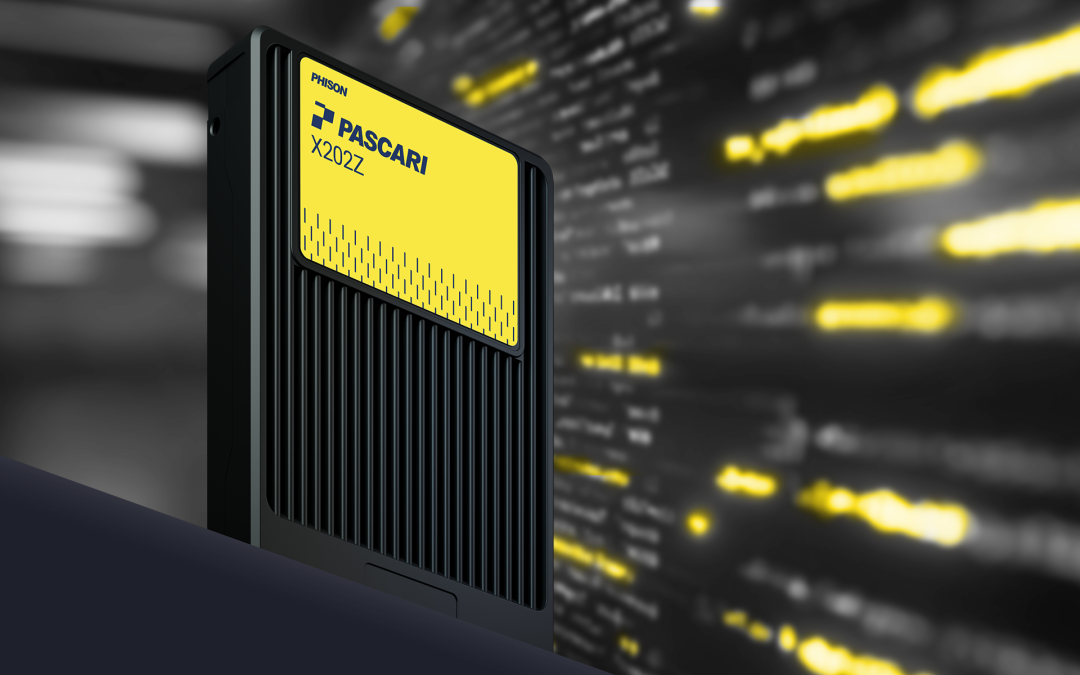
aiDAPTIV is a purpose-built Pascari solution that enables organizations to run larger and more demanding AI workloads on local systems by extending memory with an additional flash tier. And it approaches today’s memory challenges from a different angle, rather than simply adding costly GPU resources.
Instead of treating GPU memory as a rigid boundary, aiDAPTIV coordinates GPU memory, system memory, and high-performance flash as a unified memory system. In this model, frequently accessed data remains close to the GPU. Less-active data can be staged and recalled dynamically. By intelligently managing where data resides and when it is moved, aiDAPTIV extends effective GPU memory capacity.
This architecture reduces the need to keep all model components permanently resident in GPU memory. For MoE models, for example, experts can be loaded on demand rather than occupying space continuously. And for long-running or conversational inference, KV cache state can be preserved to avoid costly recomputation.
The result is a system where GPUs spend more time performing useful computation and less time idling due to memory pressure. Rather than forcing you to upgrade to a larger GPU SKU, aiDAPTIV helps you make better use of the memory resources already present in your system.
Importantly, this approach avoids the need for complex multi-GPU pooling or cluster-style parallelism. It works within realistic enterprise deployments such as workstations, AI PCs, and small servers. That matters for organizations that want AI capabilities at the edge, in departments, or within constrained environments.
By reducing memory bottlenecks, aiDAPTIV directly addresses the economic pressures created by the current pricing surge. When you can run larger models on existing hardware, you reduce the need to compete for scarce high-memory GPUs.

What aiDAPTIV enables for enterprise AI
When memory efficiency improves, several practical benefits follow. It enables you to:
-
-
- Run larger or more capable models on systems you already own. A workstation that previously struggled with context limits may now handle more complex inference tasks. A departmental server may support more advanced reasoning models without a hardware refresh.
- Use fewer GPUs or lower-memory GPU SKUs. Instead of defaulting to the highest capacity option to avoid future constraints, you can plan around a more balanced configuration. That flexibility matters when high memory GPUs carry substantial price premiums.
- Reduce system-level memory requirements. If you can use GPU memory more effectively and stage data intelligently, the need to oversize system memory to compensate may be reduced. That can lower overall system cost.
- Consume less power for greater energy efficiency. Larger GPU configurations consume more power and generate more heat. If you can achieve your AI objectives with fewer or more modest GPUs, energy consumption and cooling requirements follow suit.
- Simplify deployments. Instead of designing around multi-GPU sharding strategies or complex cluster orchestration for small-scale use cases, you can operate within a single-node architecture that aligns with departmental and edge needs.
-
Taken together, these capabilities shift the conversation. Instead of asking how many GPUs you need to buy next quarter, you can ask how efficiently your existing memory resources are being used.
That reframing is particularly important in the current market environment.
The pricing surge is a signal
The surge in memory pricing tied to AI demand is more than a temporary procurement headache. It is a signal about where constraints are forming.
When GPU memory becomes scarce and expensive, it indicates that the industry is pushing against a capacity boundary. If your strategy for scaling AI depends exclusively on purchasing more high-memory GPUs, you are directly exposed to that volatility.
A more resilient strategy focuses on memory efficiency. By reducing the amount of GPU memory required per workload, you lower your exposure to price swings and supply shortages. You also gain flexibility in how and where you deploy AI.
Enterprise AI is increasingly distributed. Teams want local experimentation. Departments want specialized tools. Edge environments need inference close to data sources. In these contexts, simply scaling centralized GPU clusters is not always practical or cost effective.
Memory-efficient architectures make these deployments viable. They allow you to scale AI workloads on systems you can realistically procure, deploy, and operate.
Turn memory constraints into a competitive advantage
For enterprise AI, memory limits are emerging as a primary constraint. While raw compute continues to advance, effective GPU memory capacity often determines what you can actually run in practice.
Adding GPUs can increase throughput, but it doesn’t always expand the usable memory available to a single workload. In a market shaped by rising memory prices and supply pressure, relying solely on larger and more numerous GPUs increases cost and complexity.
Solutions such as Pascari aiDAPTIV demonstrate a different path. By extending effective GPU memory across system memory and high-performance flash, you can run more-capable models on existing hardware. They can reduce exposure to volatile GPU pricing. They can deploy AI where it delivers the most value, from workstations to departmental servers.
As AI adoption continues to grow, the organizations that focus on memory efficiency will be better positioned to scale sustainably. In today’s environment, doing more with the memory you already have may be one of the most strategic decisions you can make.
To learn more about Pascari aiDAPTIV, download the solution brief. Or, contact us today to see how aiDAPTIV can help you achieve your AI goals at lower cost and greater efficiency.
Frequently Asked Questions (FAQ) :
Why are AI workloads increasing pressure on GPU and DRAM supply?
Modern AI models require significantly more memory for larger context windows, inference workloads and fine-tuning tasks. As hyperscalers and enterprises rapidly expand AI deployments, demand for GPUs, DRAM and NAND has outpaced manufacturing capacity, creating higher costs, longer lead times and supply uncertainty across the industry.
What is the biggest bottleneck in enterprise AI infrastructure today?
For many organizations, the biggest bottleneck is not raw compute power but inefficient data movement between storage, system memory and GPUs. When data pipelines cannot keep up with workload demands, GPUs remain underutilized, reducing performance efficiency and increasing operational costs.
How does KV-cache impact AI inference performance?
KV-cache stores token context during inference so large language models can maintain conversation continuity without repeatedly recalculating prior tokens. As context windows grow, KV-cache consumes significant GPU memory, and inefficient cache handling can increase recomputation, latency and power consumption.
Why are Mixture-of-Experts (MoE) models memory intensive?
MoE models rely on multiple specialized expert models that traditionally remain loaded in DRAM for fast access. As the number of experts increases, memory requirements rise substantially, making infrastructure scaling more expensive and difficult for enterprise AI environments.
Can AI performance improve without adding more GPUs?
Yes. Many AI workloads can achieve higher performance through better memory orchestration and optimized data flow rather than simply adding more GPUs. Improving GPU utilization, reducing recomputation and streamlining memory access often delivers more efficient scaling at lower cost.
What is Phison’s aiDAPTIV technology?
Phison’s aiDAPTIV is a controller-level AI memory orchestration platform designed to optimize how data moves between GPU memory, DRAM and high-performance flash storage. It extends effective memory capacity while improving GPU utilization and reducing infrastructure inefficiencies.
How does aiDAPTIV reduce DRAM requirements for MoE models?
aiDAPTIV stores less frequently used MoE experts on high-performance SSDs instead of keeping every expert permanently loaded in DRAM. Frequently accessed experts remain in memory while inactive experts are retrieved with low latency only when needed, significantly lowering DRAM requirements.
How does aiDAPTIV improve KV-cache efficiency?
aiDAPTIV stores evicted KV-cache tokens in flash storage instead of discarding them entirely. This allows previously used context to be retrieved quickly without forcing full recomputation on the GPU, improving latency, Time To First Token performance and overall GPU efficiency.
What benefits does aiDAPTIV provide for enterprise AI infrastructure?
aiDAPTIV helps enterprises improve GPU utilization, reduce dependence on scarce DRAM resources, lower recomputation overhead and improve inference efficiency. This enables organizations to scale AI workloads more efficiently while controlling infrastructure costs and power consumption.
Why is aiDAPTIV different from traditional AI scaling approaches?
Traditional AI scaling often depends on purchasing additional GPUs or increasing DRAM capacity. aiDAPTIV instead focuses on intelligent data orchestration and tiered memory management, enabling existing hardware to deliver higher AI performance without excessive infrastructure expansion.







 English
  繁體中文
繁體中文  简体中文
简体中文  日本語
日本語  Deutsch
  한국어
한국어