
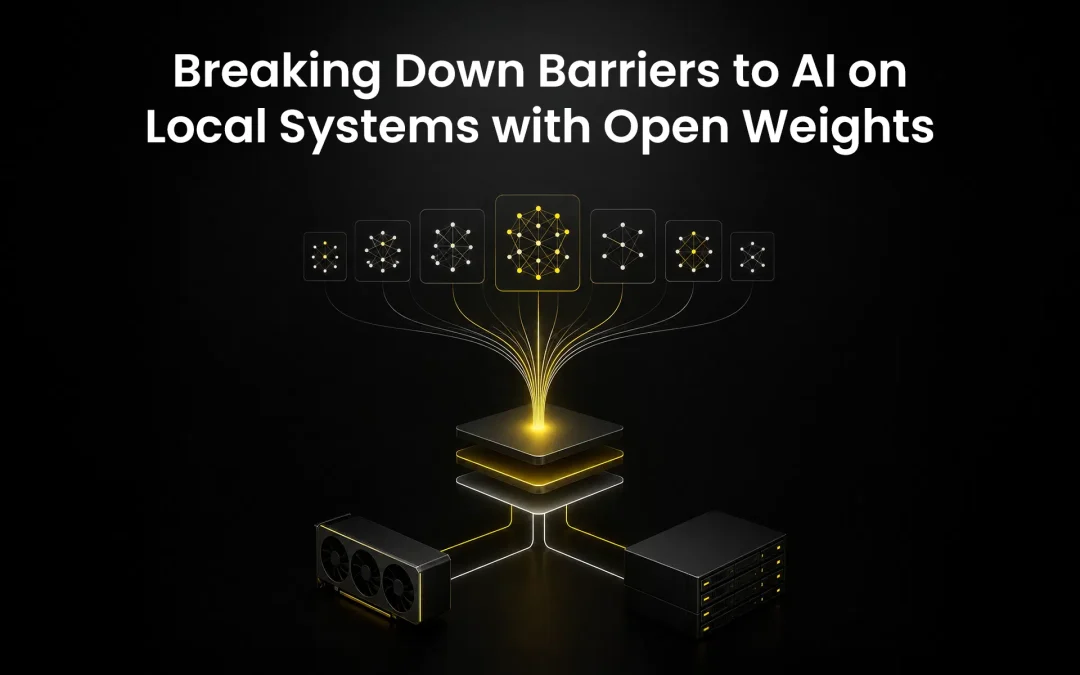
Ein kürzlich erschienener Branchenbrief: “Offene Gewichtsklassen und die amerikanische KI-Führung,”…“, argumentiert, dass Open-Weight-Modelle, also trainierte KI-Modelle, die zum Download verfügbar sind, für einen wettbewerbsfähigen und breit zugänglichen Markt unerlässlich sind. KI-Ökosystem.
Der Brief liefert überzeugende Argumente. Offengewichtete Modelle ermöglichen Organisationen den Zugang zu fortschrittlicher KI, ohne dass sie ein Modell von Grund auf neu entwickeln oder vollständig von einem proprietären Cloud-Dienst abhängig sein müssen. Sie bieten Unternehmen, Universitäten, Entwicklern und öffentlichen Einrichtungen mehr Wahlmöglichkeiten bei der Nutzung von KI – und mehr Kontrolle über die Daten und das damit verbundene Fachwissen.
Der Zugang zu einem Modell bedeutet jedoch nicht zwangsläufig, dass eine Organisation über die notwendige Infrastruktur verfügt, um es auszuführen.
Das ist die nächste Hürde, die die KI überwinden muss.
Offene Gewichte erweitern den Zugang zu KI
Openweight-Modelle sind Modelle, deren gelernte Parameter oder Gewichte zum Download verfügbar sind. Je nach Modell und Lizenz können Sie es auf Ihrer eigenen Infrastruktur bereitstellen, es für eine bestimmte Aufgabe anpassen oder Feinabstimmung Es verwendet Ihre eigenen Daten.
Dies ist nicht exakt dasselbe wie Open-Source-Software. Ein Open-Weight-Modell stellt zwar herunterladbare Gewichte bereit, ohne jedoch sämtliche Trainingsdaten, den Quellcode oder den Entwicklungsprozess offenzulegen. Dennoch bieten Open Weights einen entscheidenden Vorteil: die Wahlmöglichkeit bei der Implementierung.
Sie können ein Modell auswählen, das Ihren Anforderungen entspricht, es lokal ausführen und so die volle Kontrolle über Ihre Anwendungen und Daten behalten. Sie sind nicht darauf beschränkt, jede Eingabeaufforderung, jedes Dokument oder jeden proprietären Datensatz an einen externen Dienst zu senden.
Das macht offene Gewichtungen wichtig für Datenschutz, Souveränität, Wettbewerb, Forschung und Innovation im Bereich der KI.
Die Wahl des richtigen Modells ist jedoch nur die halbe Miete. Die Umsetzung ist die andere Hälfte, und genau hier stoßen viele Organisationen auf unerwartete Schwierigkeiten.
Herunterladbar bedeutet nicht immer auch bereitstellbar
Die Gewichte eines Modells können zwar kostenlos heruntergeladen werden, müssen aber nach der Installation trotzdem irgendwo gespeichert werden. Obwohl die Modelle offen zugänglich sind, ist der Systemspeicher begrenzt, und diese Tatsache schränkt ein, was tatsächlich ausgeführt werden kann.
Mit zunehmender Leistungsfähigkeit von KI-Modellen steigt auch ihr Speicherbedarf. Modellgewichte müssen sich den Speicherplatz mit Anwendungsdaten, temporärem Arbeitsspeicher und dem … teilen. KV-Cache Dient dazu, den Kontext während der Schlussfolgerung beizubehalten. Mixture-of-Experts (MoE)-Modelle kann viele spezialisierte Experten umfassen, auch wenn für jedes Token nur eine Teilmenge aktiv ist.
Irgendwann sind sowohl der GPU-Speicher als auch der Systemspeicher voll.
Zu diesem Zeitpunkt stehen Ihnen nur noch wenige Möglichkeiten zur Verfügung:
- Verwenden Sie ein kleineres oder aggressiver quantisiertes Modell.
- Verkürzen Sie den verfügbaren Kontext
- Reduzieren Sie die Anzahl gleichzeitiger Benutzer oder Agenten.
- Kaufen Sie deutlich teurere Hardware
- Verlagern Sie die Arbeitslast in die Cloud
- Akzeptieren Sie, dass die gewünschte Arbeitslast nicht ausgeführt werden kann.
Dadurch entsteht eine Infrastrukturlücke zwischen dem Zugang zu fortschrittlicher KI und den Ressourcen, die für deren Nutzung erforderlich sind.
Offener Zugang muss weiterhin mit Modellevaluierung, Sicherheitskontrollen und verantwortungsvoller Governance einhergehen. Infrastruktur kann zwar eine bessere Kontrolle über die Implementierung ermöglichen, macht ein Modell aber nicht per se sicher.
Erweiterung des effektiven KI-Speichers mit Flash
Pascari aiDAPTIV™ wurde entwickelt, um diese Speicherlücke zu schließen.
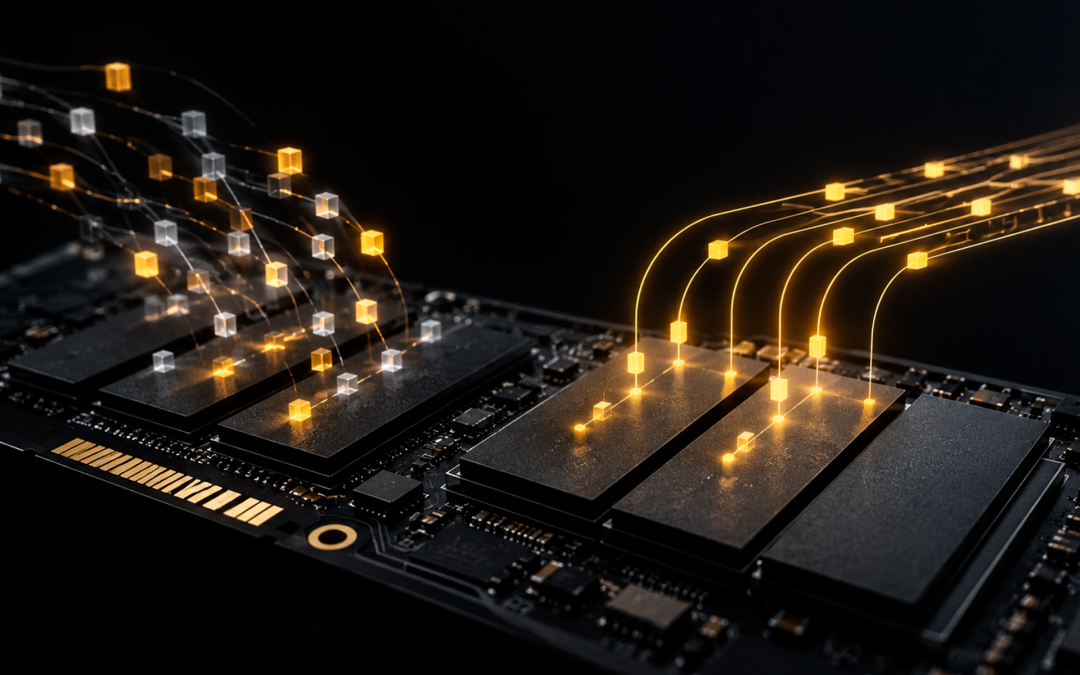
Die Lösung kombiniert aiDAPTIV Cache-Speicher mit aiDAPTIV Middleware, um GPU- und Systemspeicher um eine zusätzliche Flash-Ebene zu erweitern. Die Middleware verwaltet Daten im gesamten GPU-Speicher, Systemspeicher und Flash-Speicher, wobei häufig benötigte Daten in der Nähe der Recheneinheit gehalten und weniger aktive Daten in den aiDAPTIV Cache-Speicher verschoben werden.
Dadurch ist es praktischen lokalen Systemen möglich, größere und anspruchsvollere KI-Workloads auszuführen, als es ihr verfügbarer GPU-Speicher und DRAM normalerweise zulassen würden.
Bei MoE-Modellen kann aiDAPTIV häufig ausgewählte Experten im GPU- oder Systemspeicher halten und bei Bedarf weitere Experten aus dem Flash-Speicher laden. Für langlaufende Konversationen und agentenbasierte Workflows kann der Flash-Speicher die Kapazität des KV-Caches erweitern und so dazu beitragen, mehr Kontext zu speichern und mehr parallele Aktivitäten zu unterstützen.
Es geht nicht darum, so zu tun, als sei Flash-Speicher so schnell wie DRAM oder GPU-Speicher, denn das ist er nicht.
Der Vorteil liegt im Kompromiss. Manche Workloads laufen zwar langsamer als auf einem System mit ausreichend Arbeitsspeicher, lassen sich aber auf Hardware ausführen, auf der sie sonst gar nicht laufen würden. Dadurch erweitert sich das Spektrum der ausführbaren KI-Workloads, ohne dass die größte verfügbare GPU-Infrastruktur benötigt wird.
Mehr Kontrolle erfordert eine praktikablere Infrastruktur.
Open-weight AI bietet Ihnen mehr Kontrolle über Modellauswahl, Anpassung, Bereitstellung und Daten. Lokale Infrastruktur ermöglicht Ihnen die Ausübung dieser Kontrolle.
Gemeinsam können sie helfen:
- Bewahren Sie firmeneigene Daten auf lokalen Systemen auf.
- Verringerung der Abhängigkeit von einem einzelnen Modell oder Dienstleister
- Modelle für spezielle Anwendungen anpassen
- Unterstützung der KI-Entwicklung in Klassenzimmern, Laboren und kleineren Unternehmen
- Leistungsfähigere Modelle können auf Laptops, Workstations, Edge-Systemen und lokalen Servern ausgeführt werden.
- Die Infrastrukturausgaben sollten dem tatsächlichen Bedarf der Arbeitslast angepasst werden.
Nichts davon macht Cloud-KI oder hochmoderne Infrastrukturen überflüssig. Unterschiedliche Workloads erfordern unterschiedliche Ansätze. Sie sollten jedoch nicht zwischen einem geschlossenen Cloud-Dienst und einem lokalen Modell wählen müssen, das klein genug ist, um in herkömmliche Speicherkapazitäten zu passen.
Jetzt haben Sie mehr Möglichkeiten.
Demokratisierung der Fähigkeit, KI zu betreiben
Offene Gewichte erweitern den Zugang zu fortschrittlichen Modellen. Ein wirklich offenes KI-Ökosystem erfordert jedoch mehr als nur herunterladbare Dateien. Es benötigt auch Laufzeitumgebungen, Anwendungen und eine Infrastruktur, die den Einsatz dieser Modelle ermöglichen, selbst wenn kein riesiges Budget zur Verfügung steht.
Genau hier kommt aiDAPTIV ins Spiel.
Offene Gewichte demokratisieren den Zugang zu KI. aiDAPTIV demokratisiert die Fähigkeit, sie anzuwenden.
Erfahren Sie mehr über Pascari aiDAPTIV™.
Häufig gestellte Fragen (FAQ):
Was ist ein KI-Modell mit offener Gewichtung?
Ein KI-Modell mit offenen Gewichten ist ein trainiertes Modell, dessen gelernte Parameter (Gewichte) zum Download bereitstehen. Dadurch können Organisationen das Modell auf ihrer eigenen Infrastruktur bereitstellen und gegebenenfalls anpassen. Je nach Lizenzbedingungen können Nutzer das Modell auch mit ihren eigenen Daten feinabstimmen. Offene Gewichte bieten mehr Flexibilität bei der Bereitstellung, ohne dass die vollständigen Trainingsdaten, der Quellcode oder der Entwicklungsprozess des Modells offengelegt werden müssen.
Warum sind KI-Modelle mit offener Gewichtung wichtig für private und lokale KI?
Offene KI-Modelle ermöglichen es Unternehmen, KI auf ihrer eigenen Infrastruktur auszuführen. Dadurch reduziert sich der Bedarf, proprietäre Eingabeaufforderungen, Dokumente und Datensätze an externe KI-Dienste zu senden. Der lokale Einsatz stärkt Datensouveränität, Datenschutz, Modellanpassung und Anbieterunabhängigkeit und gibt Unternehmen gleichzeitig mehr Kontrolle über ihre KI-Anwendungen. Offener Zugang erfordert jedoch weiterhin eine angemessene Modellevaluierung, Sicherheitsmaßnahmen und Governance.
Warum benötigen große KI-Modelle während der Inferenz so viel Speicherplatz?
Große KI-Modelle benötigen Speicherplatz für Modellgewichte, Anwendungsdaten, temporären Arbeitsspeicher und den KV-Cache, der den Kontext während der Inferenz speichert. Daher kann der Gesamtspeicherbedarf die Größe der Modellgewichte allein deutlich übersteigen. MoE-Architekturen bringen einen weiteren Aspekt mit sich, da Systeme mehrere spezialisierte Experten speichern und darauf zugreifen müssen, selbst wenn jedes Token nur eine Teilmenge aktiviert.
Sollten Organisationen ein kleineres KI-Modell verwenden oder die Infrastrukturkapazität erhöhen?
Organisationen sollten je nach Arbeitslastanforderungen hinsichtlich Modellfähigkeit, Kontextlänge, Parallelität, Leistung, Kosten und Bereitstellungskontrolle zwischen einem kleineren Modell und zusätzlicher Infrastrukturkapazität abwägen. Kleinere oder stärker quantisierte Modelle reduzieren den Speicherbedarf, können aber Kompromisse erfordern. Der Ausbau der Infrastruktur ermöglicht den Zugriff auf größere Modelle und Arbeitslasten, jedoch können herkömmliche GPUs und Systemspeicher die Hardwarekosten erheblich erhöhen.
Ist lokale KI besser als Cloud-KI für die Ausführung von Open-Weight-Modellen?
Lokale KI bietet mehr Kontrolle über Modelle und Daten, während Cloud-KI Zugriff auf Infrastruktur ermöglicht, die Unternehmen möglicherweise nicht selbst erwerben oder betreiben möchten. Die geeignete Architektur hängt daher von der Arbeitslast und den Geschäftsanforderungen ab. Modelle mit offener Gewichtung machen die lokale Bereitstellung praktikabel, der Artikel positioniert lokale Infrastruktur jedoch nicht als universellen Ersatz für Cloud- oder Spitzentechnologie-Systeme.
Wie hilft Pascari aiDAPTIV™ Organisationen dabei, größere KI-Modelle lokal auszuführen?
Pascari aiDAPTIV™ erweitert die effektive Speicherkapazität für KI-Anwendungen durch eine zusätzliche Flash-Speicherebene neben GPU-Speicher und Systemspeicher. Dadurch können lokale Systeme KI-Workloads ausführen, die andernfalls den verfügbaren GPU-Speicher und DRAM übersteigen würden. aiDAPTIV Cache-Speicher und aiDAPTIV Speichermanagement-Middleware verwalten die Daten über diese Ebenen hinweg, indem häufig benötigte Daten näher am Rechenzentrum gespeichert und weniger aktive Daten in den Flash-Speicher ausgelagert werden.
Wie unterstützt aiDAPTIV Mixture-of-Experts-KI-Modelle?
aiDAPTIV unterstützt Mixture-of-Experts-Modelle, indem häufig ausgewählte Experten im GPU- oder Systemspeicher gehalten und andere Experten bei Bedarf aus dem Flash-Speicher geladen werden. Dadurch erhöht sich die effektive Kapazität für größere MoE-Implementierungen. Dieser gestaffelte Ansatz macht Flash-Speicher zwar nicht gleichwertig mit DRAM oder GPU-Speicher, ermöglicht aber Modelle, die ansonsten die Grenzen herkömmlicher Speicher überschreiten würden.
Kann aiDAPTIV KI-Systeme dabei unterstützen, längere Kontextfenster und eine höhere Anzahl gleichzeitiger Benutzer zu bewältigen?
aiDAPTIV erweitert die Kapazität des KV-Caches mit Flash-Speicher und unterstützt so KI-Systeme dabei, mehr Kontext zu speichern und mehr parallele Aktivitäten auszuführen, wenn GPU-Speicher und Systemspeicher an ihre Kapazitätsgrenzen stoßen. Dieser Ansatz ist besonders geeignet für langlaufende Konversationen und agentenbasierte Workflows, bei denen der steigende Bedarf an KV-Cache den verfügbaren Speicher während der Inferenz stark belasten kann.
Führt die Verwendung von Flash-Speicher als KI-Speicher zu einer geringeren Inferenzleistung?
Der Einsatz von Flash-Speicher als zusätzliche KI-Speicherebene kann aufgrund der höheren Latenz im Vergleich zu DRAM oder GPU-Speicher zu Leistungseinbußen führen. Allerdings ermöglicht er die Bereitstellung von Workloads, die sonst speicherbeschränkt wären. Phison positioniert aiDAPTIV genau um diesen Kompromiss zwischen Kapazität und Leistung herum: Manche Workloads laufen möglicherweise langsamer als auf Systemen mit ausreichend Hochgeschwindigkeitsspeicher, während gleichzeitig die Ausführung auf einer praktikableren lokalen Infrastruktur möglich wird.
Wie kann Phison dazu beitragen, offene KI-Infrastruktur zugänglicher zu machen?
Phison begegnet einer zentralen Einschränkung offener KI-Infrastrukturen mit Pascari aiDAPTIV™, das die effektive Speicherkapazität durch Flash-Speicher erweitert. So können Unternehmen größere und anspruchsvollere Workloads ausführen, ohne ausschließlich auf High-End-GPU-Infrastruktur angewiesen zu sein. Die Architektur erhöht die Flexibilität beim Einsatz auf Notebooks, Workstations, Edge-Systemen und On-Premise-Servern und unterstützt Unternehmen dabei, ihre Infrastrukturausgaben an die Workload-Anforderungen anzupassen.





 Deutsch
  English
  繁體中文
繁體中文  简体中文
简体中文  日本語
日本語  한국어
한국어