

AI inference, recommendation engines, and analytics workloads are exposing storage bottlenecks that traditional architectures were never designed to handle. This article explains why read-optimized enterprise SSDs improve throughput, reduce latency, and help AI infrastructure scale more efficiently using the Phison Pascari D206V.
Learn why AI inference and analytics workloads are exposing storage bottlenecks, and how the Pascari D206V can keep your data moving at scale.
AI has sparked an enormous wave of investment in GPUs and compute infrastructure, but processing power is only one piece of the performance equation. As AI applications move from experimentation to production, storage is becoming an equally important factor in overall system responsiveness.
That’s because modern AI applications spend much of their time retrieving data rather than creating it. If storage can’t keep up, expensive compute resources end up waiting for data instead of generating value.
AI read-intensive workloads such as inference services, recommendation systems, and analytics pipelines require continuous high-throughput access to model weights and datasets. These increasingly common workloads are overwhelming legacy storage and driving a shift toward read-optimized designs that improve responsiveness, reduce latency, and support enterprise-scale AI performance.

Why AI inference is read-dominant
A read-intensive workload is one that needs to retrieve data far more frequently than it writes new information. While traditional applications generate a more balanced mix of reads and writes through transactions, updates, and logging, AI inference operates differently.
Inference is the process of using a trained AI model to generate predictions or responses. Once training is complete, the model itself changes very little. Instead, every user request may require the system to read model weights, embeddings, vector databases, and supporting datasets to produce an answer. This pattern repeats thousands or even millions of times over a day. The challenge is no longer storing the model but delivering its data quickly enough to keep inference moving efficiently.
This shift has significant implications for AI inference storage. While GPUs may perform the calculations, storage determines how rapidly those calculations can begin. Delays in retrieving data translate directly into higher latency and slower user experiences.
The problem becomes even more pronounced as models grow larger. Without sufficient storage throughput and low-latency access to data, bottlenecks can reduce overall infrastructure utilization and limit enterprise AI performance.
How recommendation engines and analytics pipelines stress storage
Inference is not the only workload reshaping storage requirements. Recommendation engines and analytics platforms also generate continuous read-heavy activity that places unique demands on infrastructure.
Recommendation systems constantly retrieve user histories, product information, behavioral patterns, and embeddings to personalize experiences in real time. Every interaction may require accessing multiple datasets before presenting relevant content.
This makes recommendation engine storage a critical component of customer experience. Even small delays can affect engagement, conversion rates, and user satisfaction.
Similarly, modern analytics pipeline storage must support frequent queries across large datasets rather than occasional batch processing. Dashboards, operational intelligence, and AI-assisted analytics need to deliver near real-time insights instead of waiting for scheduled reporting cycles.
Multiple users and applications can repeatedly access these workloads simultaneously, creating sustained read pressure that legacy architectures can’t necessarily handle.
As use of AI grows, multiple read-intensive applications can compete for storage resources, amplifying bandwidth demands throughout the environment.
The challenge today is an infrastructure-wide requirement for consistent, high-throughput data delivery.
The limits of legacy storage strategies
Many traditional storage strategies evolved around balanced workloads where read and write operations occurred at relatively predictable rates. Performance planning often emphasized write endurance, capacity expansion, or generalized optimization across diverse applications.
AI changes those assumptions.
Those traditional storage systems often struggle with sustained, high-volume read activity generated by inference and analytics workloads. Instead of occasional bursts, AI applications create continuous demand for rapid retrieval across large datasets.
When storage cannot deliver data quickly enough, bandwidth saturation and increased latency affect overall system performance. Compute resources are underutilized while waiting for data, reducing infrastructure efficiency.
Simply adding more GPUs doesn’t necessarily solve the problem if storage continues to limit throughput. And expanding capacity alone may increase available space without improving responsiveness.
Organizations should evaluate storage architectures based on workload characteristics rather than assuming a one-size-fits-all approach. AI workloads require alignment between compute, networking, and storage so each component supports the others instead of creating bottlenecks.
Understanding how applications actually consume data is becoming just as important as measuring how much data they generate.
Designing for high-throughput read performance
Meeting the demands of AI requires storage optimized for sustained retrieval performance rather than only capacity or endurance.
A read-optimized SSD is designed to support workloads where retrieving data is the dominant activity. Instead of focusing primarily on write-intensive scenarios, these solutions prioritize consistent read throughput and low latency under continuous demand.
When building high-throughput storage for AI, you need capabilities that keep data moving efficiently and improve resource utilization, such as:
-
-
- Sustained read bandwidth to support continuous access to model weights and datasets
- Low latency to minimize delays between user requests and AI responses
- Consistent performance under concurrent workloads rather than short benchmark bursts
- Scalability that accommodates growing models and expanding datasets without degrading responsiveness
-
Equally important is aligning storage with workload requirements. For instance, training, inference, analytics, and archival environments each access data differently and would need to be optimized differently.
How the Pascari D206V enterprise SSD reduces AI read bottlenecks
AI read-intensive workloads are changing storage priorities. Rather than emphasizing balanced performance alone, enterprises increasingly need solutions engineered for sustained read activity.
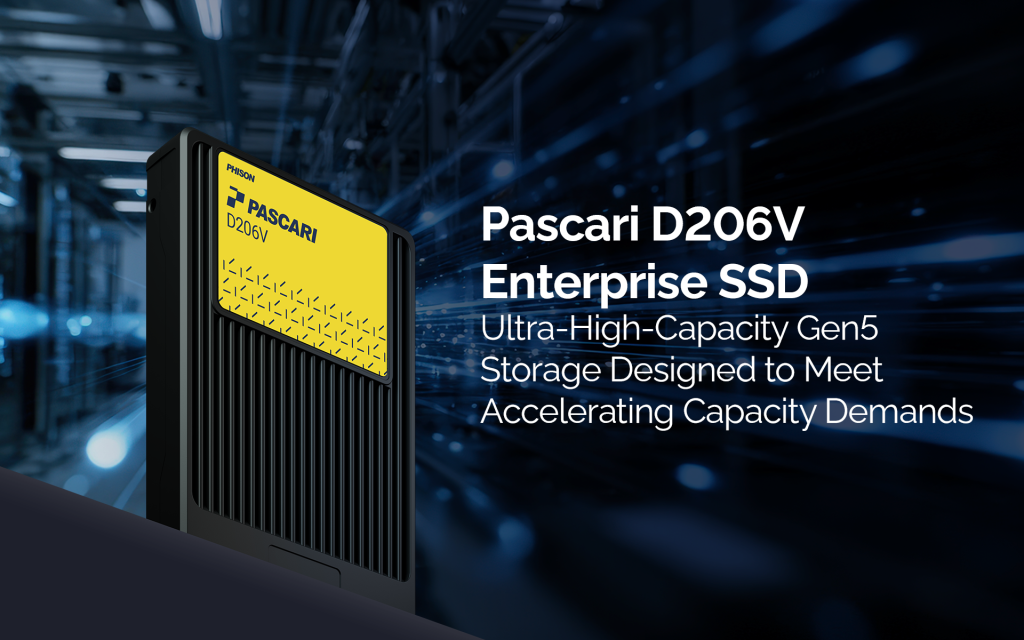
Pascari D206V enterprise SSDs address this requirement through a read-optimized architecture designed to support AI inference, recommendation engines, and analytics environments.
By delivering enterprise-grade read performance up to 14,000 MB/s, the Pascari D206V helps reduce storage bottlenecks that can otherwise slow inference and limit responsiveness. It allows you to better align infrastructure with the demands of your AI applications.
The future of AI will depend on balancing compute and storage as complementary resources. By optimizing both, your organization can deliver responsive AI experiences while maximizing infrastructure investments.
As AI read-intensive workloads continue to grow, read-optimized architectures and solutions like the Pascari D206V provide a foundation for high-throughput storage for AI that supports scalability, responsiveness, and long-term enterprise performance.
Learn more about Pascari enterprise read-intensive SSDs or contact a Pascari sales representative today.
Frequently Asked Questions (FAQ) :
What is a read-intensive AI workload?
A read-intensive AI workload retrieves stored data far more frequently than it writes new information. AI inference, recommendation engines, and analytics platforms repeatedly access model weights, embeddings, vector databases, and large datasets to generate predictions or insights. Because data retrieval dominates these workloads, storage throughput and latency have a direct impact on application responsiveness and infrastructure efficiency.
Why is AI inference considered a read-dominant workload?
AI inference is read-dominant because trained models remain largely unchanged while serving thousands or millions of prediction requests. Each request requires rapid retrieval of model weights and supporting data before computation begins. As model sizes increase, storage performance becomes a critical factor in reducing latency and maintaining high GPU utilization.
How do AI inference and AI training differ in storage requirements?
AI training emphasizes frequent writes as models continuously update parameters during learning, while AI inference prioritizes fast, repeated reads of existing model data. Training environments typically require balanced read/write performance, whereas inference environments benefit from storage optimized for sustained read throughput, predictable latency, and consistent concurrent performance.
Why can't adding more GPUs solve AI storage bottlenecks?
Adding more GPUs cannot improve AI performance if storage cannot deliver data quickly enough. GPUs depend on continuous access to model weights and datasets before processing can begin. When storage throughput or latency becomes the limiting factor, compute resources remain underutilized, reducing overall infrastructure efficiency and increasing response times.
What features should organizations evaluate when choosing storage for AI inference?
Organizations should prioritize sustained read bandwidth, low latency, predictable performance under concurrent workloads, and scalability. Storage should also align with the specific AI workload, since inference, analytics, training, and archival environments generate different data access patterns. Matching storage architecture to workload behavior improves overall system utilization and user responsiveness.
Why does Phison emphasize workload-specific storage optimization for AI?
Phison recognizes that AI workloads have fundamentally different storage access patterns than traditional enterprise applications. Rather than relying on generalized storage architectures, Phison designs controller and firmware technologies that optimize performance for specific workload characteristics, helping enterprises achieve lower latency, predictable throughput, and higher infrastructure utilization.
How does Phison reduce storage bottlenecks in AI inference environments?
Phison reduces AI storage bottlenecks by integrating controller architecture, firmware optimization, and enterprise SSD design to sustain high read throughput under continuous demand. This controller-level approach helps accelerate access to model weights and datasets, allowing GPUs to spend more time processing AI workloads instead of waiting for data.
Why are controller architecture and firmware important for AI storage performance?
Controller architecture and firmware determine how efficiently an SSD manages data movement, latency, queue handling, and sustained throughput. Well-optimized controllers maintain predictable performance during continuous AI reads, reducing bottlenecks that can otherwise limit GPU utilization and overall application responsiveness.
How does the Pascari Data Center D-Series Enterprise D206V SSD support read-intensive AI workloads?
The Pascari Data Center D-Series Enterprise D206V SSD is engineered for sustained read-intensive enterprise workloads with read performance of up to 14,000 MB/s. Its read-optimized architecture helps accelerate retrieval of model weights and datasets for AI inference, recommendation engines, and analytics while supporting consistent enterprise-scale performance under continuous demand.
How does workload-specific SSD design improve enterprise AI infrastructure?
Workload-specific SSD design improves enterprise AI infrastructure by aligning storage performance with actual application behavior instead of treating all workloads equally. Optimizing for sustained reads, low latency, controller efficiency, and predictable throughput enables higher GPU utilization, better scalability, and more responsive AI services across enterprise deployments.





 English
  繁體中文
繁體中文  简体中文
简体中文  日本語
日本語  Deutsch
  한국어
한국어