
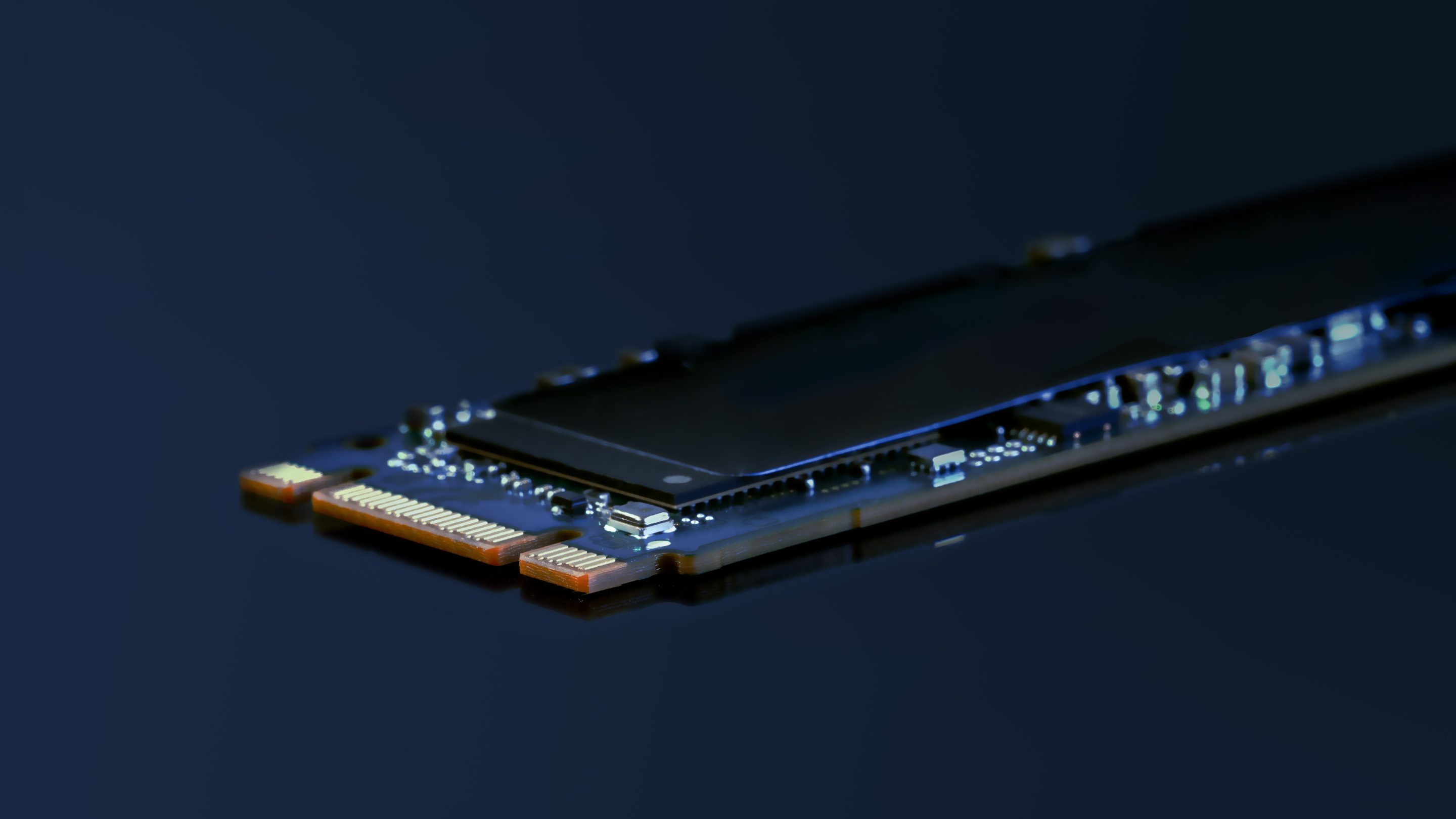
The wrong storage choice doesn’t just underperform; it can leave some workloads over-specified while exposing others to endurance limitations.
Enterprise storage decisions often start and end with a single question, and that’s which drive is fastest? It’s an understandable idea, but it misses most of what actually determines whether a storage investment pays off. Modern workloads vary enormously in performance demand, write intensity, and retention requirements, and a single high-performance SSD configuration simply can’t serve all of them well.
SSD workload optimization means matching throughput, endurance, and density to the specific behavior of each application rather than defaulting to whatever configuration looks best on a spec sheet. Get that match wrong, and the consequences show up in two different directions. Over-specifying high-performance drives for workloads that don’t need them adds capabilities the application may never use. Under-specifying endurance in write-heavy environments can consume rated endurance sooner than planned. Both are avoidable with the right framework.
Why throughput matters for AI and analytics
Throughput is a measure of how much data a drive can move in a given period, typically expressed in megabytes or gigabytes per second. For workloads built around fast, sustained data movement, it’s the metric that determines whether hardware becomes the bottleneck or stays out of the way.
AI training, inference, and analytics workloads live and die by throughput. Training pipelines often read enormous datasets across many GPUs in parallel, and storage bottlenecks can leave valuable compute resources underutilized. Inference workloads can also depend on low latency and high throughput when storage is involved in model loading, retrieval, caching, or access to supporting datasets. Analytics platforms querying large datasets face similar pressure, especially as data volumes grow and query complexity increases.
For these workloads, high-throughput storage can be the difference between hardware that keeps pace with compute and hardware that leaves expensive GPUs waiting on data. Teams building infrastructure for AI and analytics should treat throughput as a first-order requirement, not something to optimize after the fact.
Why endurance matters for continuous write workloads
Endurance indicates how much data a drive is rated to write over a specified period and is commonly expressed as Drive Writes Per Day (DWPD) over the warranty period. A drive rated for one DWPD can be rewritten entirely once per day across its warranty life without exceeding its designed endurance. That number matters enormously for some workloads and barely at all for others.
Continuous logging systems, streaming data pipelines, and other write-heavy environments put sustained pressure on endurance in a way that read-heavy workloads simply don’t. A drive that’s technically fast but rated for light write intensity may consume its rated endurance sooner than planned if it is deployed in an environment with constant, heavy write traffic. That’s not a hypothetical risk. It’s one of the most common causes of unplanned infrastructure replacement, and it’s entirely preventable with proper workload assessment upfront.
Getting endurance right means understanding sustained write intensity before selecting a drive, not after deployment reveals a mismatch. A workload with heavy, continuous writes needs a drive engineered for that pattern. A workload that’s mostly reads doesn’t need to be over-specified with endurance headroom it is unlikely to use.
The role of density in long-term data retention
Density refers to how much storage capacity a drive packs into its physical footprint, and it plays a different role than throughput or endurance. Where throughput and endurance address performance and durability, density helps support growing data volumes within available rack, power, cooling, and infrastructure constraints.
Retention-focused environments, like archival storage, compliance data, and long-term backups, prioritize density because the economics change once you’re storing petabytes rather than terabytes. Capacity-intensive environments can benefit from density when large data volumes must be supported within a finite infrastructure footprint. Higher-capacity SSDs can reduce the number of drives required for a given capacity target, helping organizations make more efficient use of rack space, power, cooling, and supporting infrastructure.
Of course, density-focused storage needs to meet baseline reliability standards, since data sitting untouched for years still must be there when someone finally needs it. But the deciding factor for these workloads is cost-effective capacity, not peak throughput or maximum write endurance. Matching density to workload and capacity requirements becomes increasingly important as storage environments scale.
The risks of one-size-fits-all storage decisions
The myth worth letting go of is that a single high-performance SSD configuration can support all enterprise workloads well. It can’t, and treating it as though it is able to can lead to two distinct types of workload mismatch.
Over-specifying happens when high-endurance or high-throughput drives get deployed for workloads that don’t require those characteristics. A read-heavy archival system doesn’t need DWPD ratings built for continuous write traffic, and paying for that headroom anyway increases infrastructure spend without improving outcomes. Under-specifying runs the opposite direction. Deploying lower-endurance drives into write-intensive environments can consume rated endurance sooner than planned and result in replacement cycles occurring earlier than expected.
Both mistakes tend to happen due to the same root cause, which is evaluating storage on peak performance metrics without fully accounting for actual workload behavior. Workload-aware storage strategy means assessing write intensity, retention requirements, and throughput needs as distinct variables, then matching infrastructure to what a workload actually does rather than what looks impressive on a benchmark. Avoiding unnecessary over-specification and premature consumption of rated endurance both come from the same discipline: matching storage characteristics to actual workload requirements.
How the Pascari portfolio enables workload-specific optimization
Once organizations understand throughput, endurance, and density as distinct, workload-specific requirements, the practical question becomes whether a storage portfolio can support that kind of targeted alignment. The Pascari enterprise portfolio spans high-throughput, high-endurance, and high-density SSD options, built specifically to support this kind of workload-specific optimization rather than forcing every deployment into a single configuration.
That range matters because real infrastructure rarely runs one type of workload. A data center supporting AI training, continuous logging, and long-term archival simultaneously needs different drives serving each of those functions well, rather than one drive serving all of them adequately. Phison’s enterprise SSD engineering, applied across the Pascari lineup, gives you the ability to align each workload with the storage characteristics it truly needs.
Match storage to what your workloads need
Balancing throughput, endurance, and density can be the difference between infrastructure that fits the workload and infrastructure that is over- or under-specified for what each application needs. High-throughput storage keeps AI and analytics workloads fed. Endurance-focused drives support sustained write-heavy environments. Density-optimized storage helps accommodate growing capacity requirements within available infrastructure.
The teams that get the most value from their storage infrastructure are the ones that treat these as three distinct decisions rather than one generic choice. Matching drives to workloads, deliberately and by category, is what turns a storage investment from a recurring cost center into infrastructure that performs the way it was budgeted to. For CIOs, architects, and procurement teams evaluating their next storage cycle, that alignment is worth building into the planning process from the start, rather than discovering after deployment that the fit was wrong.
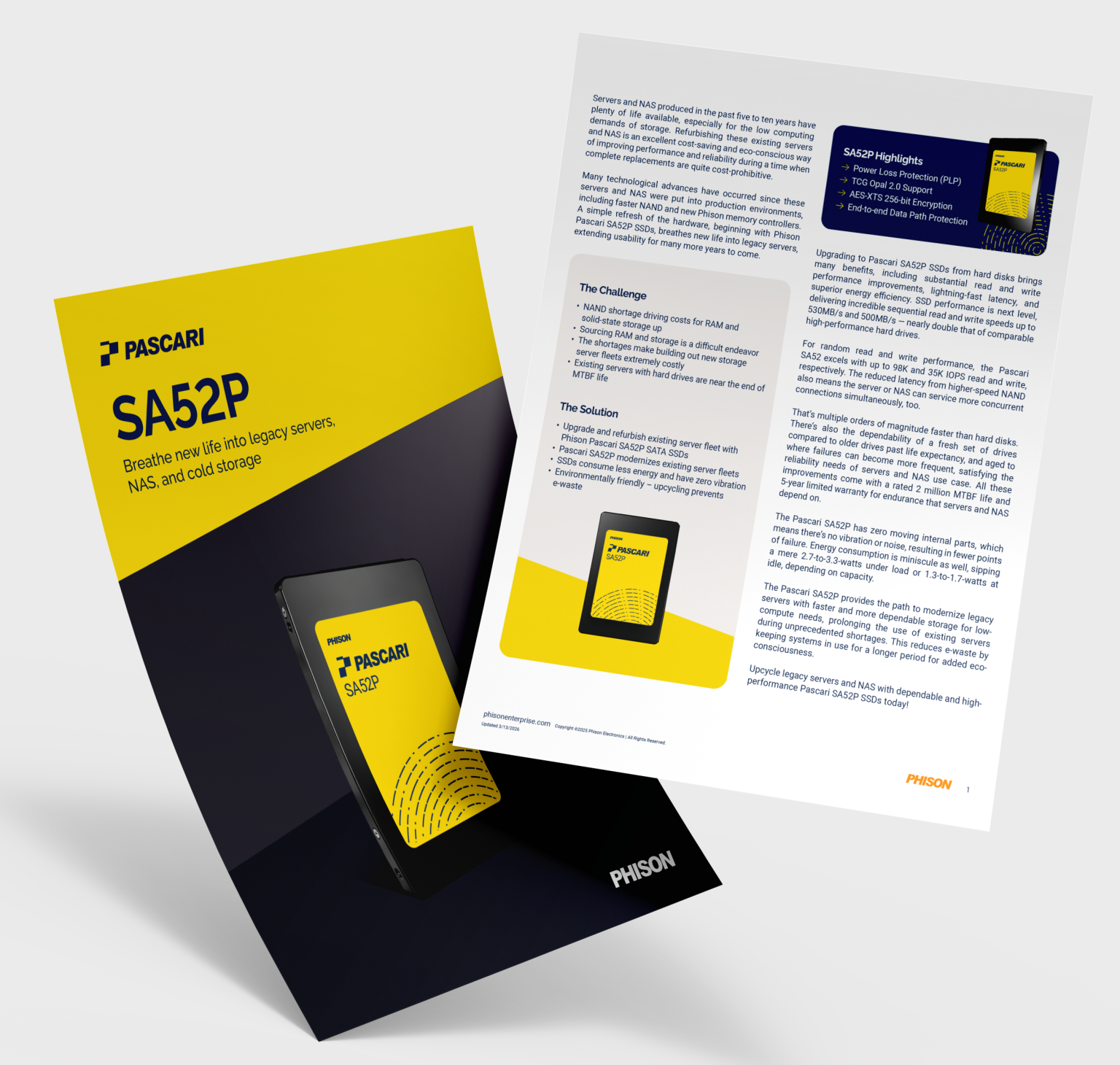
Learn more about Pascari enterprise SSDs or contact a Pascari sales representative today.





 English
 繁體中文
 简体中文
 日本語
 Deutsch
 한국어