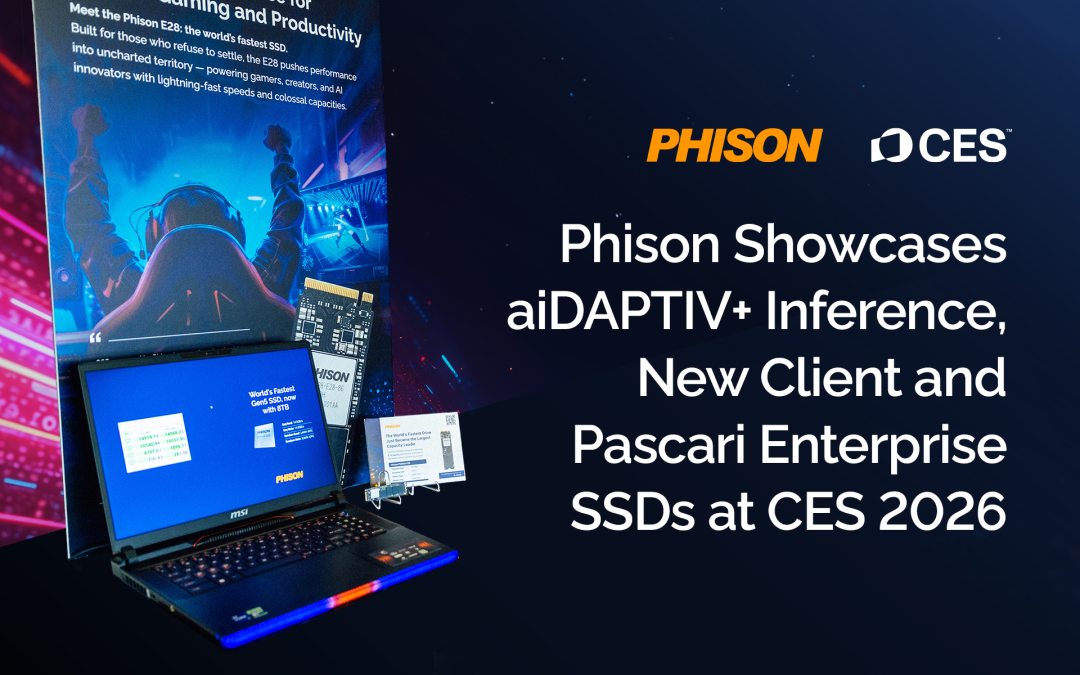
CES 2026 took place in Las Vegas in early January with over 148,000 attendees, including nearly 7,000 press, media analysts, and over 4,000 exhibitors. It was the largest CES since the pandemic. AI dominated the headlines and discussions, along with concerns about DRAM shortages caused by AI infrastructure buildout.
Phison Technology met with numerous partners and media representatives at its hotel suite, showcasing new client and enterprise hardware while also demonstrating the power of its aiDAPTIV+ software to overcome memory limitations, availability, and improve AI performance. It also held its first ever AI Summit, covering the current market, demands, and highlighting how 爱DAPTIV+ can work at all levels of the industry to power demanding inference workloads.
aiDAPTIV+ technology boosts inference performance on AMD, Intel, and NVIDIA
Rising DRAM costs made headlines in recent months, and the knock-on effects are causing alarm throughout the industry. Memory costs and availability are impacting prices and sales of servers, PCs, laptops, and smartphones. AI infrastructure buildout consumed a huge portion of the global DRAM supply, with vendors looking for alternatives to just adding more memory. aiDAPTIV+ helps tackle the DRAM shortages by enabling devices to do more with less memory, sparking interest in the technology and paving the way toward adoption of the tech by a variety of partners.
Intel announced its latest Panther Lake mobile CPUs at CES, the Core Ultra 3 family, and Phison worked with Intel to support the new built-in Xe3 Arc GPUs with aiDAPTIV+. Three demonstrations showed how aiDAPTIV+ integrates into third-party applications to accelerate AI inference, even on modest laptop hardware.
Meetily integration of aiDAPTIV+ boosted time to first token (TTFT) interactions with the meeting notes to under a second, while the ~15,000 token context length otherwise required around 40 seconds to begin responding. Two other Panther Lake laptops showed aiDAPTIV+ enabling the GPT-OSS-120B LLM to run Mixture of Experts (MoE) inference workloads that would normally require 96GB of memory, using just 32GB thanks to optimizations provided in the aiDAPTIV+ software and hardware stack.
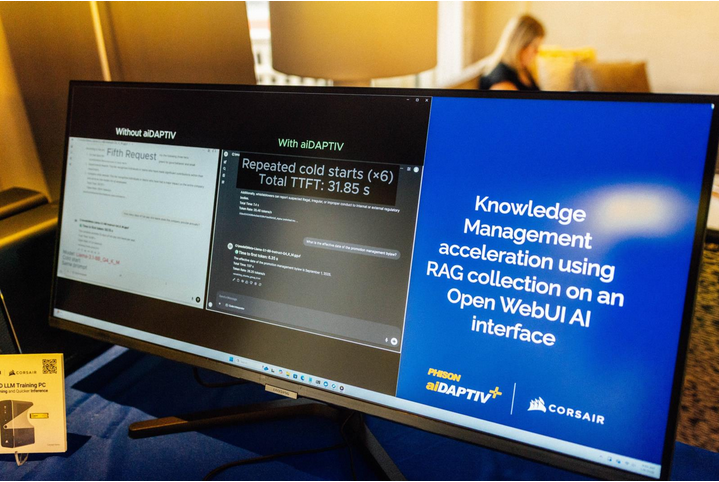
NVIDIA’s DGX Spark featured in another demo, upgraded with an aiDAPTIV+ hybrid SSD that utilizes two namespaces to separate the available NAND into normal TLC storage and a smaller SLC caching drive that provides extreme endurance. Using OpenWebUI with a prefilled KV cache and a long context length, aiDAPTIV+ enabled the DGX Spark running the Llama 3.1 8B model to begin responding to prompts in about 9 seconds, compared to around 40 seconds without aiDAPTIV+ — a greater than 4X speedup in responsiveness.
Similarly, AMD’s Strix Halo platform used the same M.2 2242 hybrid drive, running Windows 11. Interactions showed a substantial improvement in TTFT, with OpenWebUI responses requiring around 6 seconds with aiDAPTIV+ compared to 36 seconds without — a 6X improvement in responsiveness.
Several other companies also had aiDAPTIV+ enabled devices on display at CES, including Acer, Corsair, Emdoor, Lenovo, and MSI, with more partnerships in the works. Every company faces the same DRAM shortages for the coming year, and aiDAPTIV+ arrives at an ideal time to provide an alternative path for AI deployments.
Phison held its first ever AI Summit to help spread the word on aiDAPTIV+ and its potential to improve AI performance and reduce memory requirements, inviting key AI media and influencers to a half-day event. Those in attendance got a deep dive into some of the fundamentals of AI, with examples of how aiDAPTIV+ helps to mitigate the voracious appetite for memory by offloading data to high performance NAND. Attendees also left with Pascari AI100E SSD samples to encourage independent testing and research by third parties.
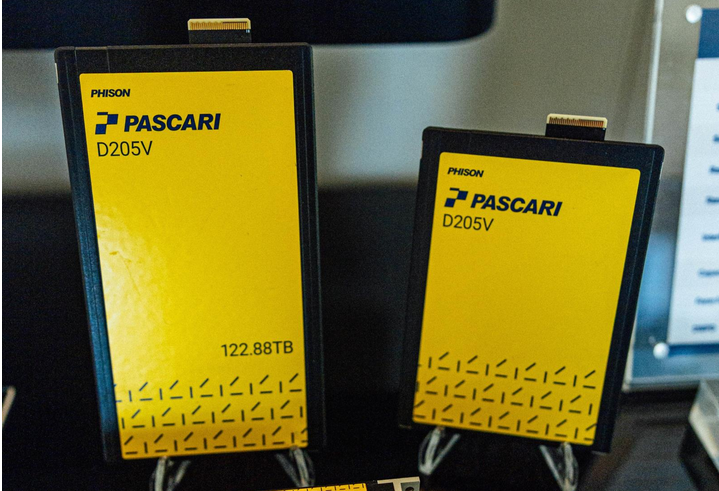
Pascari Enterprise SSDs get more speed with X201 and D201
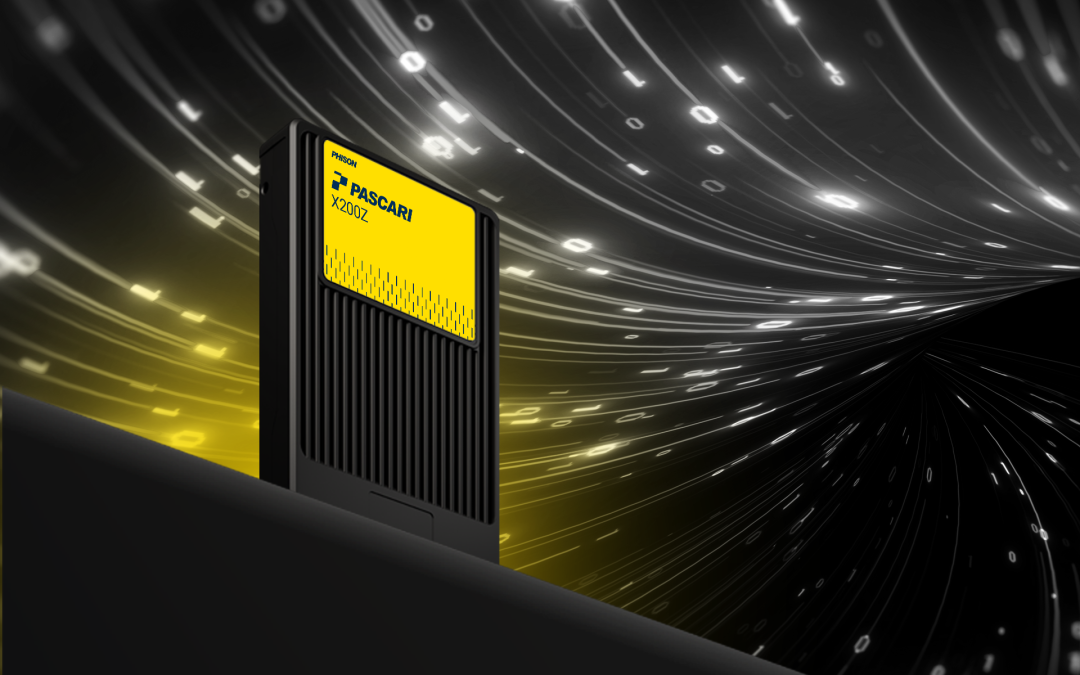
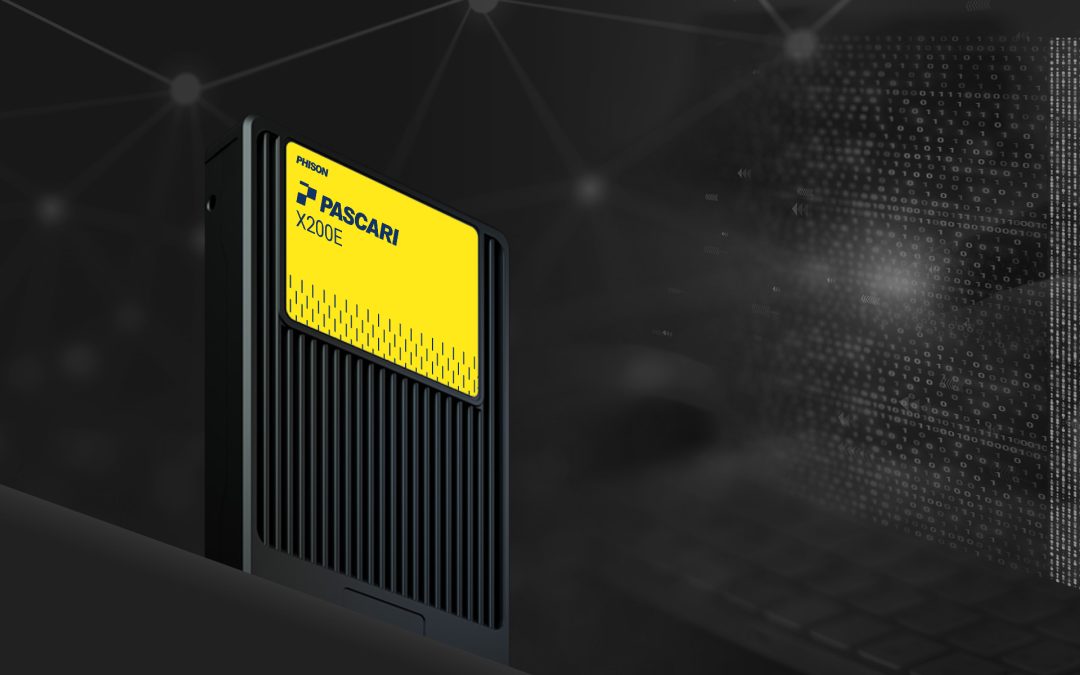
Phison launched its Pascari enterprise SSD line two years ago, and the drives have seen rapid adoption by our partners. Following the success of the Pascari X200 和 D200, Phison recently announced two new Pascari SSDs, the X201 for performance-oriented workloads, and the D201 that offers similar performance in an E1.S form factor.
The Pascari X201 offers the same core features as the X200, including a 16-channel PCIe x4 Gen5 controller. The main difference is the use of faster TLC NAND on the X201 that greatly improves write performance. As an example, where the Pascari X200P offered write speeds of up to 8.7 GB/s, the Pascari X201P improves that to 12.0 GB/s. Random writes see gains as well, from 900K IOPS with the X200P to 1,050K IOPS with the X201P.
Both the X201 and D201 use the same 16-channel Phison X2 controller, with the primary difference being form factor and capacities. The X201 is available in U.2 and E3.S, with capacities up to 30.72 TB. The D201 comes in an E1.S form factor with a maximum capacity of 15.36 TB.
Phison E37T DRAM-less controller sets records in efficiency, and E28 gets an 8TB model
Phison also announced its upcoming E37T controller, slated to launch in Q1’26. Following on the success of last year’s E31T, the E37T adds support for 3D NAND speeds up to 4800 MT/s, along with performance and efficiency improvements. The result is a drive that delivers read speeds over 14.7 GB/s, write speeds up to 13 GB/s, and 2000K random read/write IOPS — all in a drive with typical active power use of less than 2.3 W.
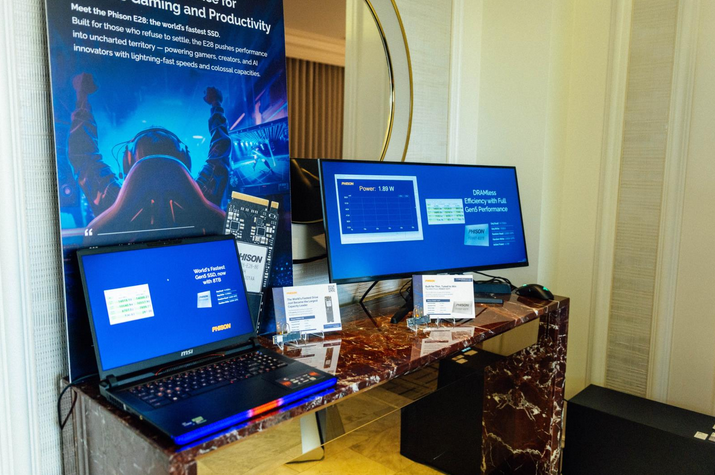
The E37T is the perfect match for thin and light notebooks, as well as gaming handhelds that need an M.2 2230 or M.2 2242 form factor. It also avoids the potential pricing impact caused by the DRAM shortages thanks to its DRAM-less design. The fast 4800 MT/s NAND support results in excellent real-world responsiveness and demonstrated QD1 read speeds of 135 MB/s in Phison’s suite while sipping just 2.0 W of power.
Phison’s E37T is a second-generation DRAM-less PCIe Gen5 controller with real-world performance that competes with many of the fastest consumer SSDs. It features a 4-channel NAND interface and built using TSMC’s N6 process node, a potent combination for efficient and fast performance.
The fastest client SSD, however, remains the 群联E28 that launched in late 2025. The E28 offers maximum performance and set records in efficiency and battery life for high-performance Gen5 SSDs. At CES 2026, Phison revealed a new 8TB capacity, which means enthusiasts no longer need to compromise between performance and capacity — now they can have both.
The E28 delivers read/write performance up to 14.9/14.0 GB/s, with 4K random throughput of up to 3,000K/2,600K IOPS. It features an 8-channel controller with a DRAM cache, and supports 3,600 MT/s 3D TLC NAND, with peak power use of less than 8 W. SSDs using the E28 controller are already available from Phison’s retail partners, with 8 TB capacity drives starting to ship in February 2026.