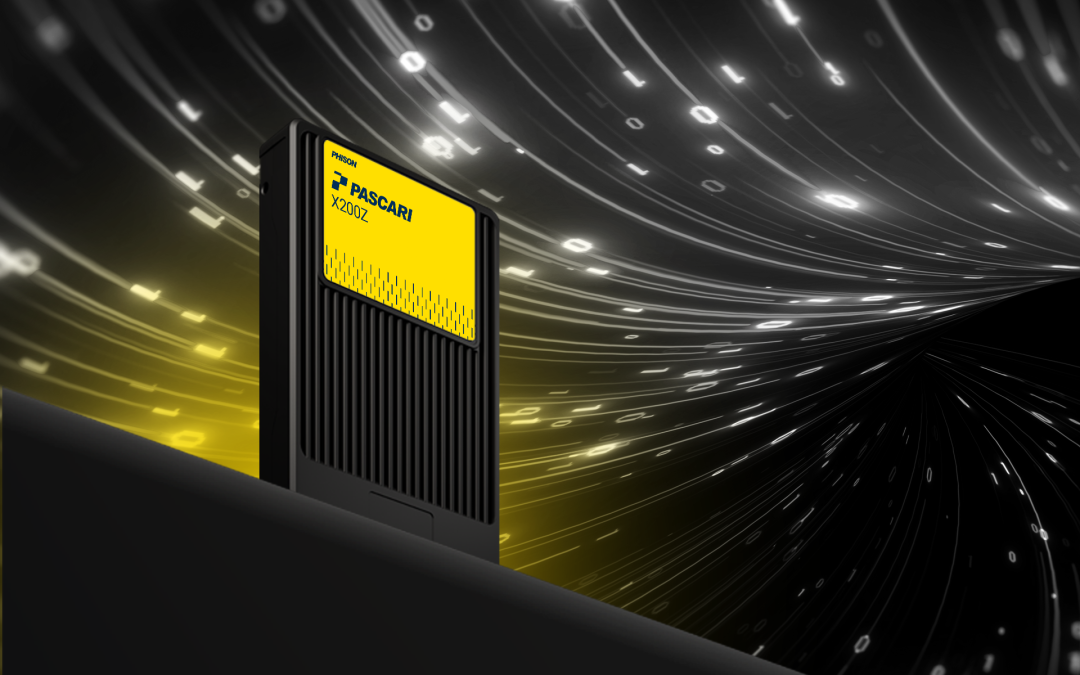
Blending the speed of modern TLC with the resilience of SLC, the Pascari X200Z sets a new standard for endurance and consistency in the data center.
Modern enterprises are running hotter, heavier and faster workloads than ever, from AI training and real-time analytics to edge caching, high-frequency trading and nonstop virtualization. Every one of these applications demands not just speed, but staying power.
The challenge, however, is that as NAND technology evolved to increase density and lower cost, endurance took a hit. The trade-off between capacity and durability has long been an accepted reality, until now.
Enter the Phison Pascari Performance X-Series X200Z, an enterprise SSD designed to deliver extreme endurance without compromising on performance. Built for today’s most write-intensive workloads, the Pascari X200Z achieves up to 60 drive writes per day (DWPD), a level previously thought possible only with legacy SLC technology.
The magic of pSLC, where endurance and performance coexist
To understand what makes the Pascari X200Z so different, it helps to look at how NAND flash has evolved—and why every leap in capacity traditionally comes with a trade-off in endurance.
The science behind endurance
At the physical level, NAND flash stores data as electrical charges inside millions of tiny cells etched into silicon. Each time a cell is written to, which essentially means erased and reprogrammed, the insulating oxide layer that holds those charges wears down slightly. Over time, that layer weakens, making it harder for the cell to hold a stable charge. This is why every NAND type has a finite number of program/erase (PE) cycles, and why “write-heavy” workloads can shorten drive lifespan.
The fewer voltage levels a cell has to distinguish between, the easier it is to read and write accurately, and the longer it lasts. That’s the foundation of the cell-level progression.
The balancing act of SLC, MLC, TLC, and QLC
Every generation of NAND has pushed to store more bits in each cell, a clever way to increase capacity and reduce cost per gigabyte. But that gain in density comes with real-world trade-offs in speed, accuracy and endurance:
-
-
- SLC (Single-Level Cell): Stores 1 bit per cell, meaning only two voltage states to detect (0 or 1). That simplicity delivers the fastest performance and highest endurance, up to 25,000 PE cycles, but comes at the cost of density. You need a lot more silicon area to store the same amount of data.
-
-
-
- MLC (Multi-Level Cell): Stores 2 bits per cell, doubling density but now requiring four distinct voltage levels. That makes reads and writes slower and more error-prone, reducing endurance to roughly 10,000 PE cycles.
-
-
-
- TLC (Triple-Level Cell): Stores 3 bits per cell, tripling capacity over SLC but pushing endurance down to 3,000–5,000 PE cycles.
-
-
-
- QLC (Quad-Level Cell): Stores 4 bits per cell, the highest density but also the most fragile, typically around 1,000–1,500 PE cycles.
-
The trade-off is clear. As capacity increases, performance consistency and endurance decrease. More bits per cell mean more precise voltage thresholds, slower writes, and higher error-correction overhead, all of which add latency and wear.
Where pSLC changes the game
This is where pseudo-SLC (pSLC) comes in. Instead of storing multiple bits per cell, Phison configures modern TLC NAND to act like SLC, one bit per cell, through its advanced controller and firmware. In doing so, each cell only toggles between two voltage states again, dramatically reducing wear and improving signal reliability.
Most consumer and enterprise drives use a small pSLC cache to temporarily speed up writes, but once that cache fills, the drive must slow down to standard TLC speeds. The Pascari X200Z, however, operates entirely in pSLC mode. That means there’s no cache to fill and no transition to slower storage tiers inside the drive.
The result is a storage architecture that restores SLC-level endurance and consistency using modern, high-density NAND. It delivers sustained write performance without the latency spikes seen in TLC/QLC drives, and provides predictable throughput and lifespan even under relentless data-center workloads.
By running full-time in pSLC mode, the Pascari X200Z effectively bridges the gap between past and future, combining the rugged endurance of early SLC SSDs with the speed and capacity of modern architectures.
Why endurance is a competitive advantage
With enterprise computing, performance is only half the story. True reliability comes from endurance, or the ability of an SSD to sustain heavy write workloads day after day, year after year, without degradation.
While many enterprise SSDs on the market today are rated for just 1 to 5 drive writes per day (DWPD), the Pascari X200Z takes endurance to an entirely new level with an industry-leading 60 DWPD. That means the drive can be completely rewritten 60 times every single day for five years straight and still stay within its rated lifespan.
To put that into perspective, the 3.2 TB model can handle more than 192 TB of data writes per day, or a total of 350 petabytes written over five years. That’s equivalent to continuously writing 2.22 GB of data every second of every day for half a decade. Or, in practical terms, the endurance of roughly 12 times the industry’s “high-end” standard for enterprise SSDs.
This level of durability gives organizations the confidence to deploy the Pascari X200Z in even the harshest data-center environments that would quickly wear out typical drives.
High endurance helps protect data, but it also protects performance. Drives with limited PE cycles tend to slow down as wear accumulates, triggering background garbage collection and write-amplification events. The Pascari X200Z’s all-pSLC architecture virtually eliminates those issues, maintaining consistent latency and throughput from day one to year five.
The result is predictable performance, fewer replacements, lower operational overhead and a total cost of ownership that makes endurance itself a competitive advantage.
And those benefits aren’t just theoretical, they’re transformative in real-world environments where data is in constant motion. From AI training pipelines to tiered storage architectures, the Pascari X200Z delivers the stability, speed, and resilience that demanding workloads depend on.
Ideal use cases for the Pascari X200Z
Not all workloads stress storage in the same way, but in today’s data centers, the ones that matter most often push hardware to its absolute limits. That’s where the Pascari X200Z excels. With its combination of extreme endurance, consistent latency and PCIe 5.0 performance, it’s purpose-built for environments where data never stops moving.
AI training and inference pipelines
Training modern AI and machine learning models involves a nonstop cycle of reading, updating and rewriting massive datasets. Each phase generates terabytes of writes as parameters are refined and checkpoints are saved. The Pascari X200Z’s 60 DWPD endurance lets it handle these repetitive write operations with ease, maintaining low latency even under sustained load. Its predictable performance helps ensure GPUs stay fed with data, minimizing idle time and keeping expensive compute resources fully utilized.
High-frequency trading and real-time analytics
In financial markets and large-scale analytics platforms, microseconds matter. The Pascari X200Z’s all-pSLC design ensures the fastest possible response times for both reads and writes, even when queues are deep and workloads are unpredictable. That means consistent transaction speeds, faster data ingestion and fewer latency spikes during peak activity.
Edge caching and tiered storage
Many enterprises are adopting tiered storage architectures to balance cost, capacity and performance. In these environments, the Pascari X200Z serves as the top-tier cache, the high-speed layer that absorbs incoming writes and delivers frequently accessed data instantly.
Behind it, larger-capacity drives such as the Pascari Data Center D-Series D205V, built on high-density QLC NAND, can handle long-term, less-frequent data storage efficiently. Together, they form a seamless hierarchy. The Pascari X200Z provides blistering front-end speed and write endurance, while the Pascari D205V offers the capacity backbone that keeps total cost of ownership in check.
Content delivery, virtualization and database workloads
From CDN edge nodes to hypervisor clusters and transactional databases, the Pascari X200Z offers the consistency needed for 24/7 uptime. Its ability to sustain massive mixed read/write loads makes it ideal for caching metadata, logs and active transaction tables that demand both durability and speed.
The Pascari X200Z’s versatility helps make the anchor point for modern data-center architecture, where endurance and throughput combine to eliminate the usual compromises between speed, capacity and reliability.
Built for the future of the data center
With its PCIe 5.0 interface, NVMe 2.0 support and Phison’s in-house X2 controller, the Pascari X200Z is ready for next-generation servers and workloads.
It’s a drive built not just for speed, but for stability, scalability and security, with features like full power loss protection, AES-XTS 256-bit encryption and NVMe-MI management.
Where legacy endurance leaders like Intel Optane have exited the market, the Pascari X200Z now carries the torch, delivering higher throughput, modern standards and proven reliability.
The SSD that outlasts and outperforms
In an era of exponential data growth and nonstop demand, endurance has become performance’s most valuable partner. The Phison Pascari X200Z delivers both, breaking past conventional trade-offs to give enterprises a drive that can handle the heaviest workloads without slowing down or wearing out.
For organizations ready to future-proof their data infrastructure, the message is clear: The Pascari X200Z isn’t just another enterprise SSD. It’s endurance, redefined.
Explore our Pascari X200Z white paper for performance benchmarks, endurance testing, and real-world workload results.
常见问题 (FAQ):
What does 60 DWPD mean, and why does it matter for enterprise SSDs?
60 DWPD (Drive Writes Per Day) means the SSD can be fully rewritten 60 times per day over its rated lifespan. This level of endurance is critical for write-intensive enterprise workloads such as AI training, real-time analytics, logging, and caching. Most enterprise SSDs are rated for only 1–5 DWPD, which limits sustained write performance and drive longevity. At 60 DWPD, the Pascari X200Z enables predictable performance, longer service life, and reduced replacement cycles in demanding environments.
How does pSLC differ from standard TLC or QLC NAND operation?
Pseudo-SLC (pSLC) configures TLC NAND to store one bit per cell instead of three, reducing voltage states and significantly lowering wear. This improves write latency, signal reliability, and endurance. Unlike traditional SSDs that use pSLC only as a temporary cache, the Pascari X200Z operates entirely in pSLC mode, delivering sustained performance and endurance without write cliffs or cache exhaustion.
Why do high-density NAND SSDs usually sacrifice endurance?
Higher-density NAND increases bits per cell by using tighter voltage thresholds. Each program and erase cycle degrades the cell’s oxide layer, and finer voltage margins accelerate wear and error rates. As a result, endurance declines sharply as NAND moves from SLC to TLC and QLC. This physical limitation is why controller-level approaches, such as full-drive pSLC operation, are required to restore endurance.
How does endurance affect real-world SSD performance over time?
As SSDs wear, they rely more heavily on garbage collection and error correction, increasing latency and reducing throughput. This degradation is especially noticeable in sustained write workloads. High-endurance designs minimize wear from the start, allowing performance to remain stable throughout the drive’s lifespan rather than declining as the drive ages.
Is high endurance only relevant for niche workloads?
No. Modern enterprise environments generate continuous write activity from virtualization, containers, AI pipelines, and metadata logging. Even mixed workloads benefit from higher endurance because it stabilizes latency, reduces write amplification, and lowers operational risk across the data center.
How does the Pascari X200Z compare to legacy SLC or Optane solutions?
Legacy SLC SSDs and Optane offered exceptional endurance but suffered from limited capacity, high cost, or market discontinuation. The Pascari X200Z delivers SLC-class endurance using modern TLC NAND configured in full-time pSLC mode, while supporting PCIe Gen5 and NVMe 2.0. This provides higher throughput, broader platform compatibility, and long-term availability.
Why is full-drive pSLC more effective than pSLC caching?
pSLC caches accelerate short write bursts but revert to slower TLC behavior once the cache fills, causing latency spikes. The Pascari X200Z eliminates this issue by running the entire drive in pSLC mode, ensuring consistent write performance and predictable latency regardless of workload duration or intensity.
What workloads benefit most from the Pascari X200Z?
The Pascari X200Z is designed for write-heavy and latency-sensitive workloads, including AI training and inference, high-frequency trading, real-time analytics, edge caching, virtualization, and transactional databases. These environments demand sustained write performance and consistent latency that conventional enterprise SSDs struggle to maintain.
How does the Pascari X200Z fit into tiered storage architectures?
In tiered storage, the Pascari X200Z functions as the high-performance, high-endurance front tier that absorbs frequent writes and hot data. Capacity-focused QLC SSDs can then be used for colder data, reducing write amplification, extending system lifespan, and lowering total cost of ownership.
What makes the Pascari X200Z future-ready for next-generation data centers?
The Pascari X200Z supports PCIe 5.0, NVMe 2.0, NVMe-MI management, full power-loss protection, and AES-XTS 256-bit encryption. Combined with Phison’s in-house controller and firmware co-design, it is engineered for scalable, predictable performance in AI-driven and software-defined infrastructure.