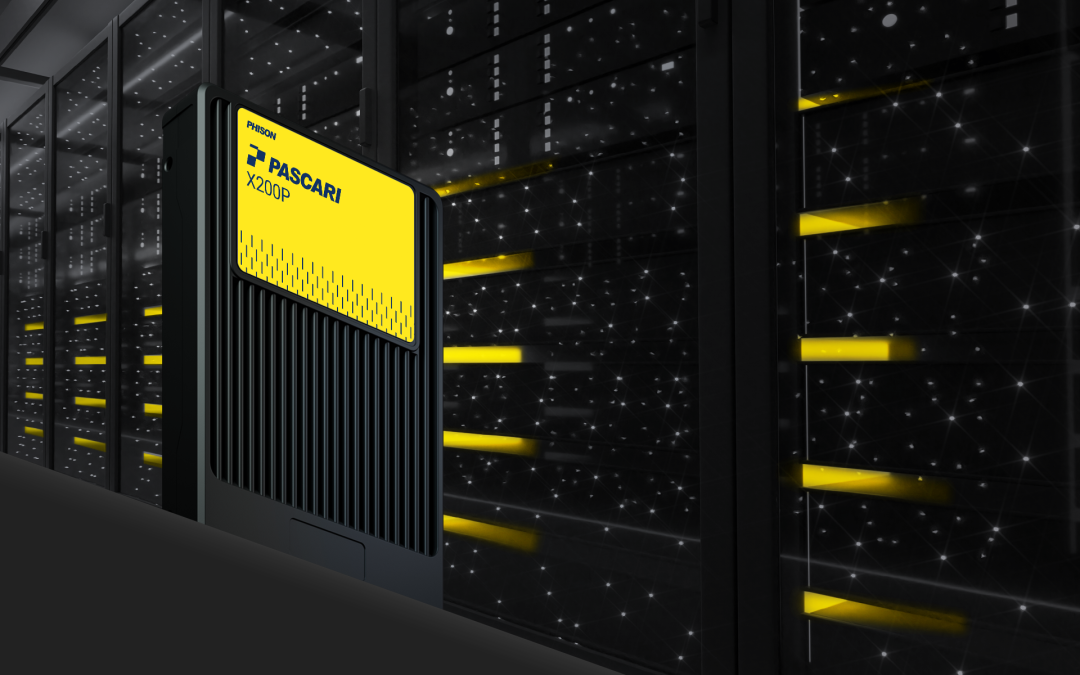
The Pascari X200P delivers high-performance PCIe Gen5 storage designed for scalable, everyday enterprise workloads.
As data centers modernize to support AI, analytics and increasingly virtualized environments, storage decisions have become more deliberate. Organizations are looking to adopt newer interfaces and faster architectures, while still keeping costs, capacity and operational requirements in check. While some workloads demand specialized storage optimized for extreme endurance, many others benefit most from fast, reliable SSDs designed for broad deployment.
这 Phison Pascari Performance X-Series Enterprise X200P fills that role within the Pascari X200 family. It delivers PCIe Gen5 performance, strong responsiveness under mixed workloads and enterprise-grade reliability, making it a practical choice for organizations that want to modernize their storage infrastructure without overbuilding for edge-case scenarios.
This article looks closer at the capabilities that define the Pascari X200P and the reasons why it is often the right fit for general-purpose data center environments.
PCIe Gen5 performance as a practical foundation
PCIe Gen5 is quickly becoming the new baseline for modern servers, enabling higher throughput and lower latency across the storage stack. The Pascari X200P brings that performance to a wide range of enterprise deployments, delivering sequential read speeds that fully utilize the PCIe Gen5 interface and strong random IOPS for demanding applications.
For organizations upgrading CPUs, GPUs and network fabrics, storage can easily become the limiting factor. By providing Gen5 performance at the foundation tier, the Pascari X200P helps ensure compute resources stay productive to support faster data access, quicker job completion and smoother system operation as workloads scale.
Optimized for the read-heavy and mixed workloads most environments run
While storage benchmarks often highlight pure write scenarios, most enterprise workloads are dominated by reads or balanced read and write activity. Virtualized infrastructure, analytics platforms, inference pipelines and many databases rely on fast reads and consistent responsiveness rather than sustained write saturation.
The Pascari X200P is well suited for these patterns, delivering strong performance and quality of service under mixed read and write workloads. This consistency helps reduce latency spikes and performance variability that can impact application behavior, especially when multiple workloads share the same storage pool.
Endurance aligned with typical enterprise usage
Endurance requirements vary widely across workloads, and higher endurance often comes with trade-offs in usable capacity and cost. The Pascari X200P is rated for one drive write per day, which aligns well with the needs of many general-purpose enterprise applications.
By intentionally limiting overprovisioning, the Pascari X200P prioritizes usable capacity and performance efficiency, allowing you to get more working storage per drive while still maintaining predictable behavior over time. This design choice helps maximize performance per terabyte and supports cost-efficient scaling in environments where write volumes are well understood. For organizations with controlled and measurable write activity, this approach provides a reliable five-year lifespan without reserving excess flash that may never be used.
Capacity density that simplifies scaling
The Pascari X200P is available in capacities up to 30.72 TB and supports both U.2 and E3.S form factors, giving architects flexibility as they design or expand storage environments. Higher capacity per drive allows teams to consolidate storage, reduce hardware sprawl and scale pools more efficiently as data volumes grow.
This density makes the Pascari X200P a strong fit for a range of general-purpose data center use cases, including virtualization clusters, analytics platforms, shared data repositories, and AI inference or preprocessing workloads that are more read-focused than write-intensive. In these environments, capacity growth is steady and predictable, and performance consistency across drives is often more important than extreme endurance. With aligned behavior across capacities, the Pascari X200P supports expansion without introducing unexpected changes in performance or operational complexity.
Enterprise features without unnecessary complexity
As the foundation of the performance-focused Pascari X200 family, the Pascari X200P is a fully enterprise-class SSD built for production data center environments. It supports both single-port and dual-port configurations, giving you flexibility when designing for availability and failover. Dual-port support enables high-availability architectures where two servers can connect directly to the same drive, allowing workloads to continue running smoothly in the event of a system issue.
The Pascari X200P also includes power loss protection to help safeguard in-flight data during unexpected outages, along with hardware-based encryption options that support data security and compliance requirements. Support for modern NVMe standards ensures compatibility with current server platforms and management tools, helping IT teams integrate the drive cleanly into existing infrastructure.
Together, these capabilities help you maintain availability, protect sensitive data and simplify storage operations at scale. They also ensure that you can confidently deploy the Pascari X200P in critical systems as well as in secondary or shared environments, providing consistent behavior and enterprise reliability wherever it’s used.
The practical choice for modern data centers
The Pascari X200P is designed for organizations that want to move forward with PCIe Gen5 storage while maintaining a clear connection between workload needs and infrastructure choices. It delivers the speed, consistency and capacity required for everyday enterprise operations, without introducing unnecessary overhead.
As part of the broader Pascari X200 portfolio, the Pascari X200P gives IT teams a strong foundation on which to build, enabling them to reserve higher-endurance solutions for workloads that truly require them. For many environments, that balance is exactly what keeps the data center efficient, scalable and ready for what comes next.
For a deeper look at performance testing, architecture details and workload analysis, our Pascari X200P white paper explores how this foundation comes together in practice.
常见问题 (FAQ):
What role does the X200P play within a PCIe Gen5 storage strategy?
The X200P serves as a practical foundation tier for PCIe Gen5 adoption. It delivers Gen5 bandwidth and low latency without the cost or endurance overhead of drives built for extreme write-heavy workloads. This makes it well suited for broad deployment across modern data centers upgrading CPUs, GPUs, and network fabrics where storage bottlenecks must be avoided.
Which enterprise workloads are best suited for the X200P?
The X200P is optimized for read-heavy and mixed workloads such as virtualization platforms, analytics pipelines, inference environments, shared data repositories, and general-purpose databases. These workloads prioritize consistent responsiveness and predictable latency over sustained write saturation.
How does the X200P differ from high-endurance enterprise SSDs?
The X200P is rated at one drive write per day, intentionally aligning endurance with typical enterprise usage. By avoiding excessive overprovisioning, it maximizes usable capacity and performance efficiency per terabyte, making it more cost-effective for environments with controlled write volumes.
Why is PCIe Gen5 important for everyday enterprise storage?
PCIe Gen5 increases throughput and reduces latency across the storage stack. As compute and network performance scale, Gen5 storage ensures data access keeps pace, preventing storage from becoming the limiting factor in modern, highly parallel workloads.
How does the X200P maintain performance consistency under mixed workloads?
The drive is designed to deliver stable quality of service under concurrent read and write activity. This reduces latency spikes and performance variability when multiple workloads share the same storage pool, improving application predictability in production environments.
How does capacity density benefit data center scaling?
With capacities up to 30.72 TB per drive, the X200P enables higher storage density per server. This reduces hardware sprawl, simplifies pool expansion, and lowers operational overhead while supporting steady, predictable data growth.
What form factors does the X200P support?
The X200P is available in both U.2 and E3.S form factors. This allows architects to deploy it across existing server designs or next-generation platforms without redesigning storage layouts.
Does the X200P support high-availability architectures?
Yes. The drive supports both single-port and dual-port configurations. Dual-port support enables shared-drive access between two servers, allowing workloads to continue operating during a system failure or maintenance event.
How does the X200P address data protection and security?
The drive includes power loss protection to safeguard in-flight data during unexpected outages. It also supports hardware-based encryption options, helping organizations meet security and compliance requirements without adding external complexity.
Why is the X200P considered a balanced enterprise storage option?
The X200P delivers Gen5 performance, predictable endurance, high capacity density, and enterprise reliability without overengineering. This balance allows organizations to standardize on a performance-capable foundation tier while reserving higher-endurance solutions only for workloads that truly require them.