
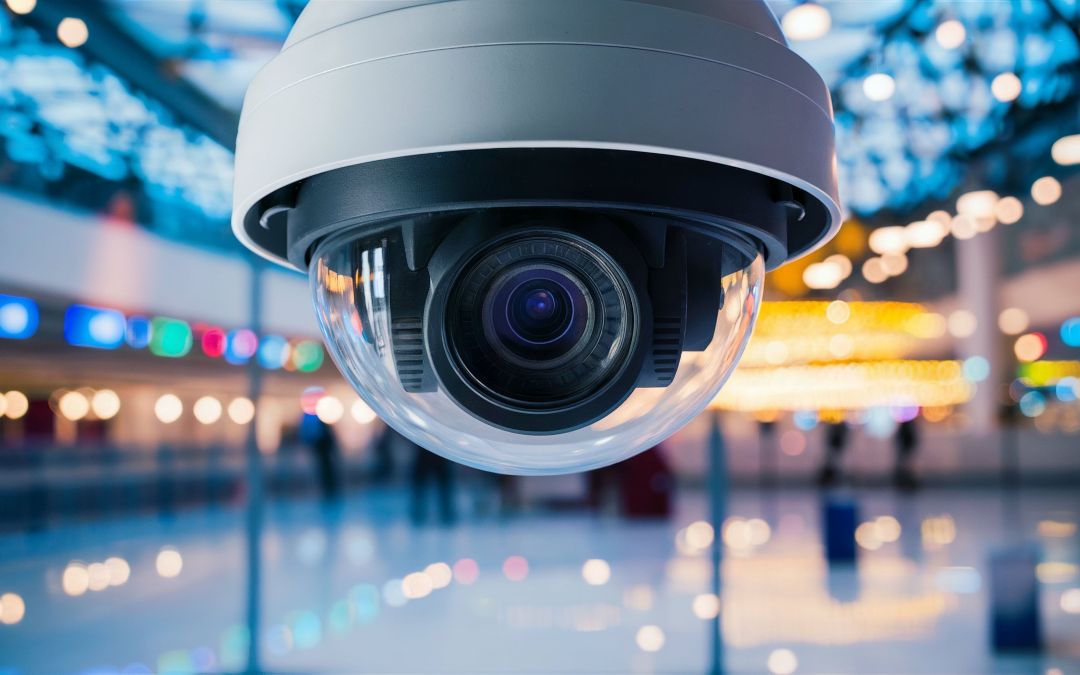
As video surveillance systems proliferate, they require data storage that can deliver advanced performance.
In a blog article, Phison engineer Henry Chen outlined the benefits of using SSDs and SDs in video surveillance systems. In this article, we’ll take a look at how Phison is meeting today’s advanced needs for SSDs that enable even the most sophisticated surveillance systems.

Need for high-performance surveillance video storage is growing
Video surveillance is becoming ubiquitous. Whether they’re in a public square for citizen safety, on the production line to ensure product quality or acting as a layer of protection for remote high-value equipment, video cameras are everywhere.
Today’s users are also demanding ever-higher video resolutions. As computing capacities have grown and the ability to store and analyze massive volumes of data evolves, high-resolution video is quickly becoming standard. Higher resolution video enables other advanced technologies, such as facial recognition software, real-time analytics for dynamic traffic signal control and more granular computer vision capabilities for QA purposes in manufacturing.
The higher the resolution, however, the higher storage capacity is needed. In addition to high-capacity storage, SSDs used in video surveillance need to meet other critical requirements. These include:
-
-
- Reliability
- Physical and digital durability
- Low power consumption
- Power loss prevention
- Security
-
Phison offers specialized SSDs designed for video surveillance
As a world leader in NAND controllers and flash storage solutions, Phison knows SSDs. The company also understands modern video surveillance technologies and requirements—and to that end announced the launch of SSD storage solutions made for multi-channel video and surveillance systems: the mid- to high-range S12DI and the cost-effective S17T SSD solutions. These video and surveillance SSDs can help you get the clear, precision video footage you need, every time.
They offer:
Reliability
Video surveillance systems require data storage that is reliable, and that usually means an SSD capable of standing up to long periods of continuous, intensive data writes. Phison SSDs can handle sustained
write performance, up to a maximum sustained performance of 500 MB/s and includes proprietary firmware that helps prevent dropped frames. They also come with a warranty of more than three years of high-resolution recording action.
Physical and digital durability
Many video surveillance systems record around the clock and need data storage that can keep up. Typical mean time before failure (MTBF) for Phison’s video surveillance SSDs is 2 million hours for outstanding durability. The company’s SSDs undergo comprehensive and rigorous testing and can remain operational in harsh environments, which includes extreme temperatures from -40 degrees C (-40 degrees F) to 85 degrees C (185 degrees F) as well as vibration, dust and shock.
Low power consumption
Organizations around the world are striving to decrease carbon emissions and reduce energy consumption, and this includes use of power in their video surveillance systems. Phison video surveillance SSDs deliver optimal performance at less than 4 watts of active power consumption. That’s a lot less energy than a hard disk drive would use.
Power loss prevention
Phison surveillance SSDs come with power loss prevention, or pFail protection circuitry, that helps prevent the loss or corruption of data in the event of unplanned power failure. By charging whenever the SSD powers up, tantalum electrolytic capacitors on the SSD can act as a sort of uninterruptible power supply. When power goes out, the capacitors keep the SSD running for a short time, which allows it to move all the data in volatile memory to NAND flash cells for safekeeping.
Learn more: Avoiding SSD Data Loss With Phison’s Power Loss Protection
Security
Phison cares about protecting your critical data. That’s why the company’s surveillance SSDs have a number of security features in the firmware. These include anti-tampering protection that protects against X-rays, firmware anti-rollback protection and key revocation, secure debug with default lockdown and authenticated unlock, AES-256 data encryption and secure boot and firmware updates. Phison also helps protect stored data with its exclusive Smart Rescue data recovery software tool. This tool allows customers to recover data from an SSD in specific abnormal conditions where the damage is not physical.

Advanced data storage that meets today’s—and tomorrow’s–needs
Phison is committed to investing heavily and continuously to research and develop the next big thing in data storage technologies. The company has an eye on the future and will continue to deliver what modern organizations require as tech capabilities such as video surveillance, AI, machine learning, data analytics and more evolve
Frequently Asked Questions (FAQ):
Why are SSDs increasingly preferred over HDDs in video surveillance systems?
SSDs provide sustained write performance, lower latency, and higher reliability than HDDs, which is critical for continuous, multi-channel video recording. As video resolutions and frame rates increase, HDDs struggle with dropped frames and mechanical wear. Surveillance-grade SSDs are designed to handle nonstop write workloads while consuming significantly less power and operating reliably in harsh environments.
What storage challenges do high-resolution surveillance systems create?
Higher resolutions generate exponentially more data, increasing the need for high-capacity storage with consistent write speeds. In addition to capacity, systems must prevent frame loss, support real-time analytics, and remain stable under constant operation. This makes controller firmware optimization and endurance ratings just as important as raw capacity.
What does sustained write performance mean in surveillance workloads?
Sustained write performance refers to the SSD’s ability to continuously write data at a consistent speed over long periods without throttling. In surveillance environments, this prevents dropped frames and corrupted footage, especially when recording from multiple cameras simultaneously.
How important is environmental durability for surveillance storage?
Environmental durability is critical. Surveillance systems often operate in outdoor, industrial, or remote environments. Storage must withstand extreme temperatures, vibration, dust, and shock to ensure uninterrupted operation and long-term reliability.
Why is power loss protection critical in surveillance SSDs?
Unexpected power outages can corrupt in-flight data stored in volatile memory. Power loss protection ensures buffered data is safely written to non-volatile storage during an outage, preserving footage integrity and preventing system-level data loss.
What makes the S12DI and S17T SSDs suitable for video surveillance?
These SSDs are engineered specifically for multi-channel surveillance workloads. They deliver sustained write speeds up to 500 MB/s, use firmware optimized to prevent dropped frames, support long endurance cycles, and integrate power loss protection and security features at the controller level.
How does low power consumption impact surveillance system design?
Lower power consumption reduces operational costs, thermal output, and cooling requirements. SSDs operating at under 4 watts of active power enable more energy-efficient surveillance system designs compared to HDD-based architectures.
What security features are built into surveillance SSDs?
Security features include hardware-level encryption, secure boot, authenticated firmware updates, anti-rollback protection, and anti-tampering safeguards. These protections help ensure the integrity and confidentiality of stored surveillance data.
How is data recovery handled in abnormal conditions?
Specialized recovery tools allow data to be retrieved from SSDs in certain non-physical failure scenarios, adding an additional layer of protection for mission-critical surveillance deployments.
How is surveillance storage evolving to support AI and analytics?
Next-generation surveillance storage is being designed to support AI-driven analytics through higher endurance, low-latency access, secure firmware architectures, and scalable performance.





 English
  繁體中文
繁體中文  简体中文
简体中文  日本語
日本語  Deutsch
  한국어
한국어