
How the growing pull of data is reshaping storage strategies and driving demand for high-performance SSDs.
In today’s digital economy, data is more than just a resource, it’s an anchor. Wherever large volumes of data accumulate, they start to pull in applications, services and even infrastructure. This phenomenon is known as data gravity, and it’s fundamentally reshaping how organizations think about storage.
As enterprises embrace AI, machine learning, real-time analytics and IoT, data volumes are exploding, and so is the importance of keeping compute and storage close to where that data lives. This shift is exposing the limitations of legacy storage architectures and making the case for a new generation of high-performance storage solutions that can thrive in a world defined by data gravity.

What is data gravity?
Coined by software engineer Dave McCrory in 2010, data gravity refers to the tendency of data to attract other data, applications and services as it grows in size. Much like a planet with strong gravitational pull, a large dataset draws in compute resources, making it more efficient to move processing closer to the data than to move the data itself.
Example 1: A healthcare provider might accumulate massive amounts of imaging data in one location. Instead of transmitting that data across networks for analysis, AI models are increasingly brought to the data, either in a centralized data center or at the edge within hospital networks.
Example 2: In financial services, real-time trading algorithms rely on instant access to vast streams of market data. Storing that data in close proximity to compute infrastructure, within high-performance on-prem or co-located environments, reduces latency and increases throughput.
How data gravity affects storage architecture
Data gravity impacts how and where storage is deployed. As data grows, moving it becomes more costly, complex and time-consuming. Instead of lifting and shifting data to centralized clouds or remote locations, organizations are increasingly keeping storage as close as possible to where data is generated or consumed.
This shift is driving new storage paradigms:
-
-
- Edge storage for IoT and sensor data that must be processed locally
- AI-ready storage architectures that support GPU clusters and real-time training pipelines
- Hybrid cloud storage that balances on-prem performance with cloud-scale flexibility
-
In each case, the gravitational pull of data is dictating where storage must reside, and how fast and flexible it needs to be.
Storage challenges created by data gravity
While data gravity promotes performance and proximity, it also introduces a range of challenges:
-
-
- Latency sensitivity – Applications like autonomous driving, fraud detection and smart manufacturing require instant data access. Any delay caused by remote storage access can disrupt operations, diminish results or in some cases cause physical harm.
- Data silos and fragmentation – As data clusters form in different business units, edge sites or cloud regions, it becomes harder to unify access and enforce governance across the organization.
- Infrastructure bottlenecks – Traditional storage systems often can’t scale fast enough or deliver the IOPS (input/output operations per second) needed to keep up with AI and analytics workloads.
- Cloud egress costs – Moving large datasets between cloud providers, or from cloud to edge, can incur significant costs due to bandwidth and egress fees, making centralized architectures financially unsustainable.
-

How high-performance SSDs help overcome data gravity issues
Next-generation SSDs are increasingly seen as the foundation for data gravity-resilient architectures. These advanced drives offer dramatic improvements in speed, scalability, endurance and efficiency, delivering the performance needed to process massive datasets closer to where they reside.
Here’s how SSDs can help mitigate data gravity challenges:
-
-
- Ultra-low latency and high IOPS – Modern NVMe SSDs deliver millions of IOPS with microsecond-level latency, enabling real-time data access for applications like AI inference, video analytics and transactional workloads.
- Edge-ready footprints – Compact, power-efficient SSDs can be deployed in rugged edge environments, from factory floors to remote research stations, bringing enterprise-grade storage closer to the data source.
- PCIe bandwidth saturation – Today’s AI infrastructures require storage that can saturate PCIe lanes (e.g., Gen4 or Gen5), ensuring GPUs are never bottlenecked by slow data delivery. High-throughput SSDs can deliver tens of GB/s to meet this need.
- Durability for write-intensive workloads – AI training and analytics workloads involve heavy write activity. Enterprise SSDs built with TLC or QLC NAND offer the endurance required for sustained, high-volume writes without compromising lifespan or integrity.
- Support for intelligent tiering – Modern storage platforms can integrate SSDs into intelligent tiering strategies, automatically placing hot, frequently accessed data on SSDs, while offloading cold data to more cost-effective storage tiers. This helps manage costs without compromising performance.
-
The road ahead: SSDs as the backbone of modern storage
As data gravity continues to shape IT architecture, one thing is clear: storage must be fast, local and scalable. Next-gen SSDs are uniquely positioned to meet these demands, empowering enterprises to build architectures where storage aligns with data location, not the other way around.
Organizations that embrace this shift will benefit from:
-
-
- Reduced latency and faster insights
- Lower data movement costs
- More resilient and scalable architectures
- Greater alignment between storage and application needs
-
In short, SSDs are no longer just a faster alternative to hard drives, they’re becoming a strategic enabler of the modern data infrastructure.

Turn your storage into a strategic advantage with Phison
In the age of data gravity, the right data storage is not just a technical concern, it’s a business imperative. Where data resides determines how fast you can act, how much you spend and how competitive you remain.
Forward-looking companies are investing in high-performance SSDs and intelligent storage architectures that meet data where it lives. With the right strategy, storage can become a source of agility and innovation, rather than a bottleneck.
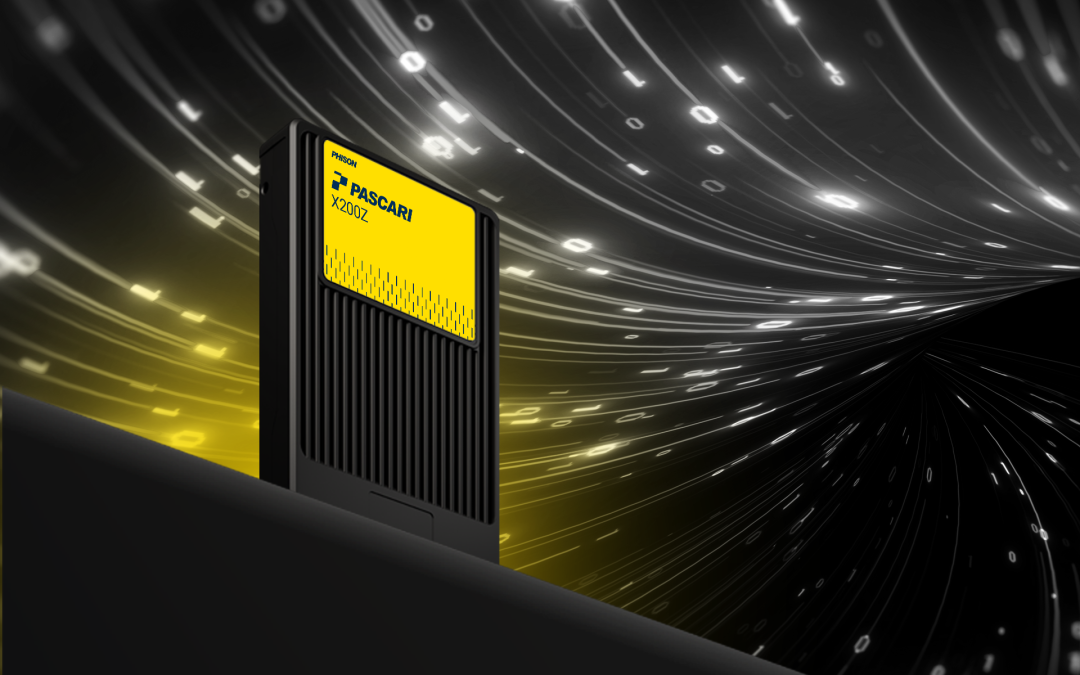
And for organizations looking to thrive in this data-centric future, next-gen SSDs, like Phison’s Pascari Enterprise SSDs, offer a critical foundation. With advanced performance, endurance and integration capabilities, they empower your data strategy to keep pace with the gravity of the modern digital world.
Frequently Asked Questions (FAQ) :
What is data gravity in modern IT infrastructure?
Data gravity refers to the tendency of large datasets to attract applications, services, and compute resources. As data volumes increase, moving the data becomes inefficient, so organizations instead move processing closer to the data. This concept influences where infrastructure is deployed and how storage architectures are designed.
Why is data proximity important for AI and analytics workloads?
AI training, inference, and real-time analytics require rapid access to large datasets. Keeping compute close to storage reduces latency and avoids network bottlenecks, enabling faster model training, real-time decision making, and improved system efficiency.
How does data gravity affect cloud and edge computing strategies?
Data gravity encourages hybrid architectures. Organizations often store critical data on-premise or at the edge for performance while leveraging cloud environments for scalability and backup. This approach balances latency, cost, and flexibility.
What challenges does data gravity create for enterprises?
Common challenges include data silos across regions, increased infrastructure complexity, higher cloud egress costs, and performance limitations from legacy storage systems that cannot scale with modern workloads.
Why is latency critical in data-driven applications?
Applications such as autonomous vehicles, financial trading platforms, and industrial automation require near-instant data access. Even small delays can reduce accuracy, disrupt operations, or create safety risks.
How do enterprise SSDs help address data gravity challenges?
Enterprise NVMe SSDs provide ultra-low latency, high IOPS, and high throughput, enabling data processing close to the source. This architecture minimizes network transfers while supporting AI pipelines, analytics engines, and transactional workloads.
What performance advantages do PCIe Gen4 and Gen5 SSDs provide?
PCIe Gen4 and Gen5 SSDs deliver tens of gigabytes per second of bandwidth. This allows storage subsystems to keep pace with GPU clusters and AI workloads that require extremely high data throughput.
Why is endurance important for AI and analytics storage?
AI training and data processing generate heavy write workloads. Enterprise SSDs designed with optimized NAND and advanced firmware ensure consistent performance and long drive lifespan even under sustained write pressure.
How does intelligent storage tiering improve efficiency?
Intelligent tiering automatically places frequently accessed “hot” data on high-performance SSDs while storing cold data on lower-cost media. This balances performance with cost efficiency across large data environments.
How do Phison Pascari Enterprise SSDs support data-centric infrastructure?
Phison Pascari Enterprise SSDs are engineered for low-latency storage environments with optimized firmware, high endurance NAND management, and scalable NVMe performance. These drives enable OEMs and data centers to deploy AI-ready storage platforms that align compute with data location while maintaining reliability and performance.




 English
  繁體中文
繁體中文  简体中文
简体中文  日本語
日本語  Deutsch
  한국어
한국어